
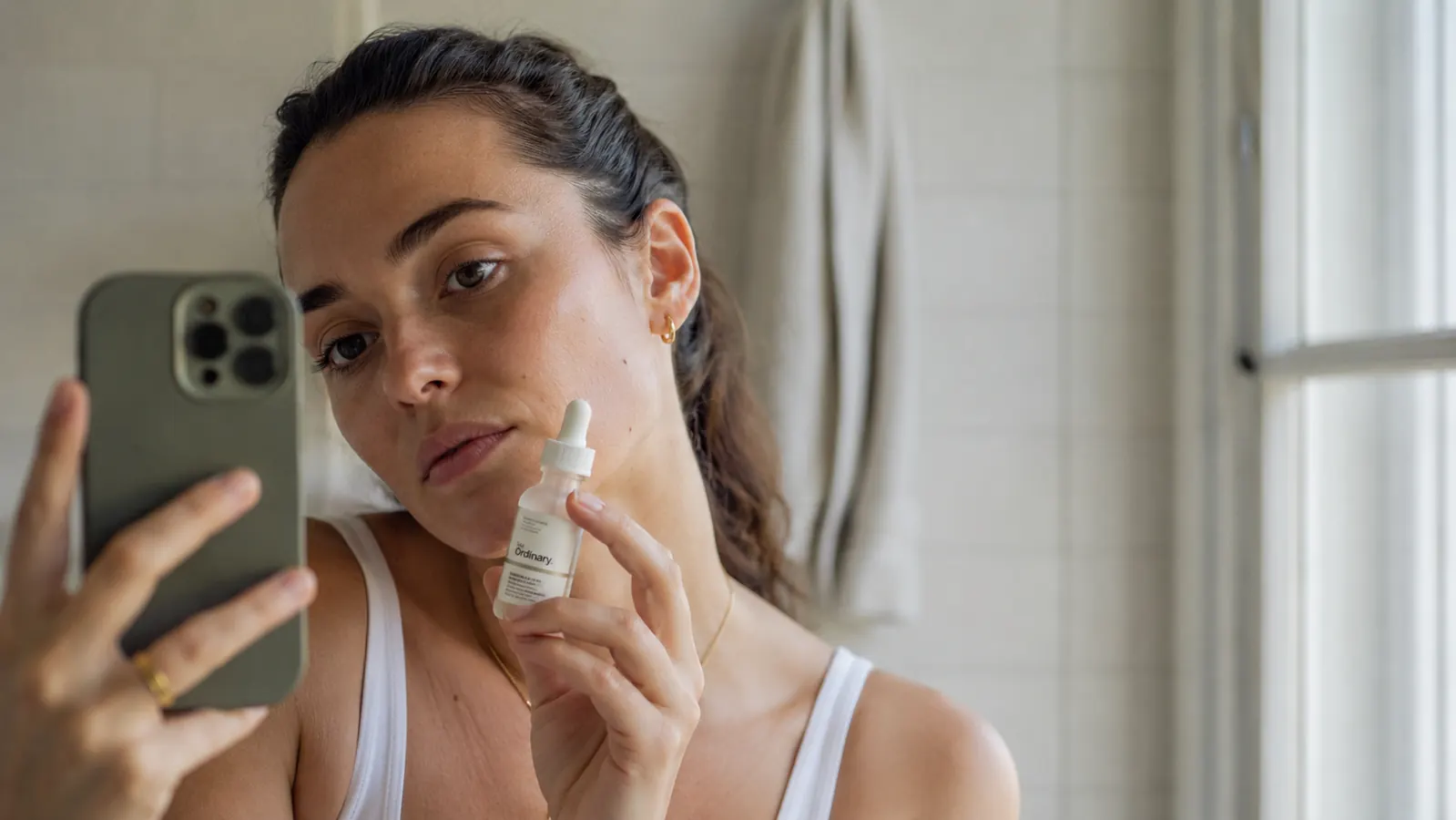
If your skin is consistently oily by midday, dealing with blemishes that never quite clear, or showing enlarged pores you cannot seem to shrink, there is a good chance your routine is missing one step, or has the right step in the wrong place. I spent three years as a retail skincare buyer before I started reviewing products independently, and niacinamide is the ingredient I saw misused more than any other. People were either skipping it entirely or layering it in the wrong order and wondering why nothing changed. The serum itself was fine. The application was the problem.
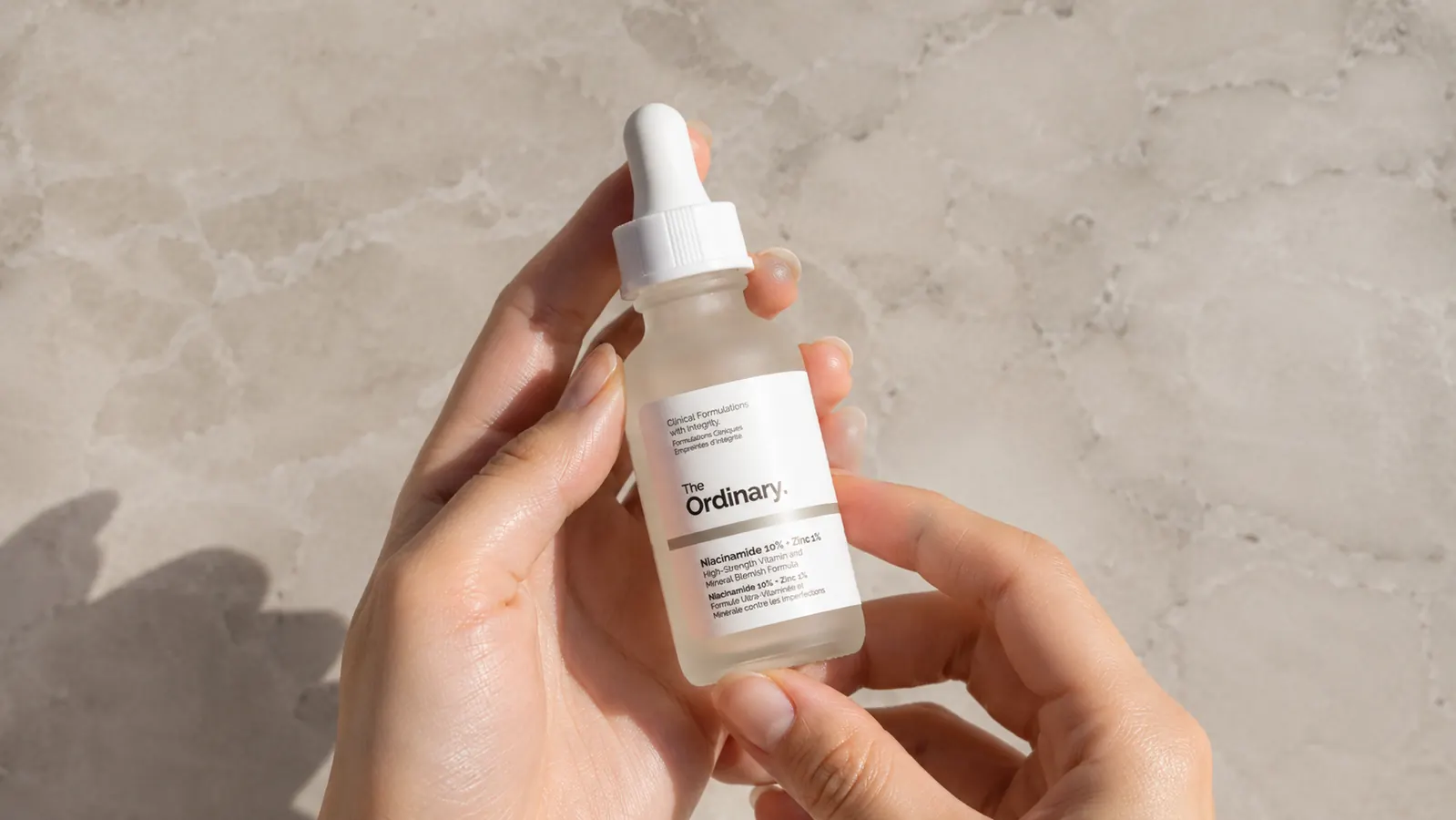
The product I use and recommend most often for everyday niacinamide use is The Ordinary Niacinamide 10% + Zinc 1%. It is a no-frills water-based serum with a 10% niacinamide concentration paired with 1% zinc, which together regulate sebum, visibly reduce the appearance of pores over time, and calm the low-grade redness that shows up with blemish-prone skin. For a thorough breakdown of how it performs over months, see my full five-month review of The Ordinary Niacinamide. What this guide covers is the how: the exact sequence, timing, and pairings that make a real difference in how well the serum works.
If your skin is oily and breaking out, this is likely the one serum your routine is missing.
The Ordinary Niacinamide 10% + Zinc 1% has over 58,000 reviews on Amazon and a 4.7-star rating. It is a straightforward, high-concentration formula with no filler. Check current availability and pricing before working through the steps below.
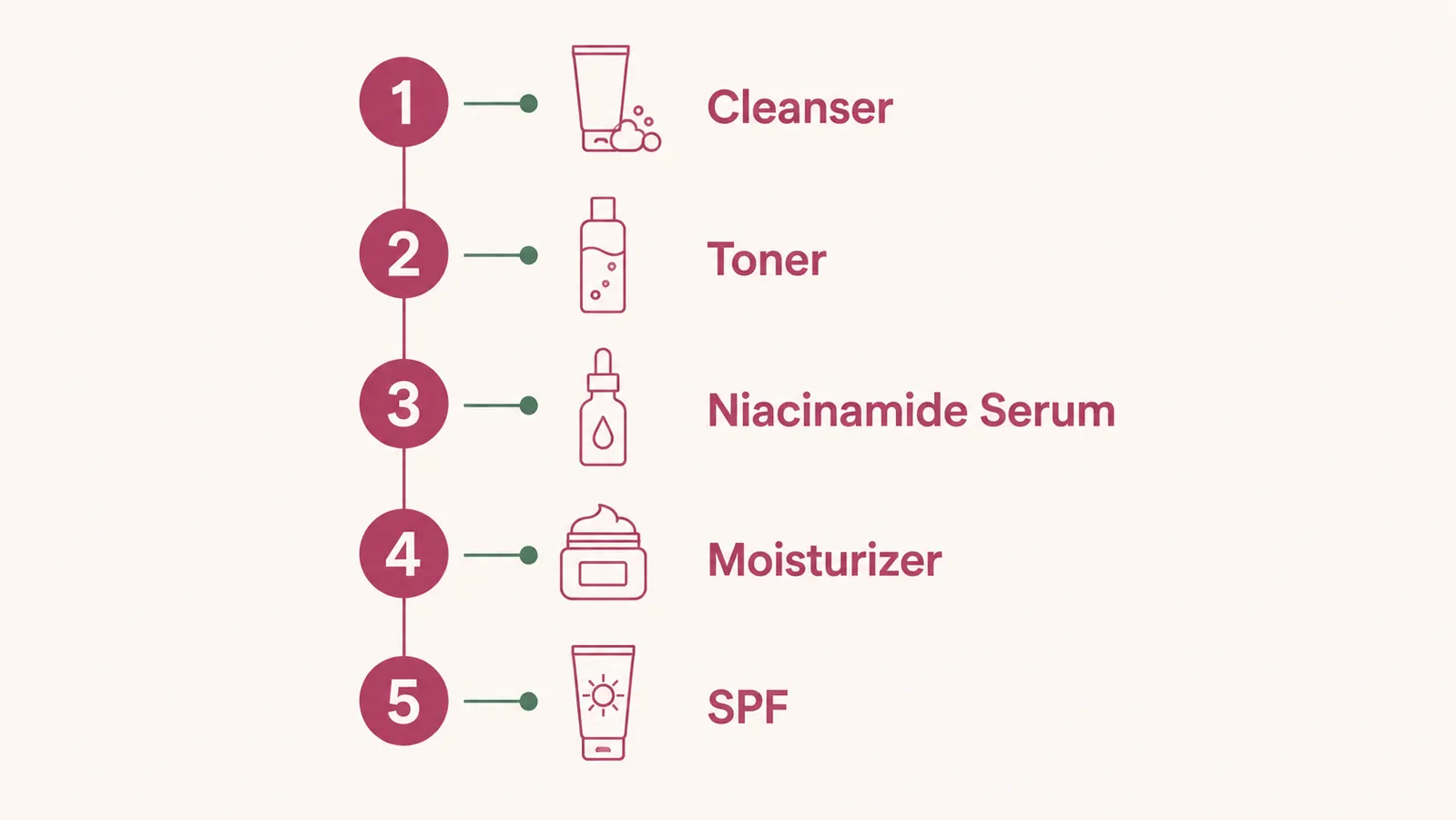
Amazon Check Today's Price on Amazon →Step 1: Cleanse First, and Make Sure Your Face Is Still Slightly Damp
The Ordinary Niacinamide 10% + Zinc 1% is a water-based serum, which means it absorbs better into skin that still has a small amount of surface moisture rather than skin that has been patted completely dry. After rinsing off your cleanser, gently pat your face two or three times with a clean towel so the skin is barely damp, not dripping, then apply the serum immediately. That window of slightly-damp skin is when a water-based formula does its best work.
The cleanser you use in this step matters more than people expect. Anything that strips the skin barrier, heavy sulfate formulas or cleansers with fragrance, will leave your skin in a low-grade irritated state that niacinamide then has to fight through before it can do anything useful. I use a fragrance-free, low-pH gel cleanser in the morning. If your cleanser leaves your skin feeling tight and squeaky after rinsing, that tightness is a sign of barrier disruption, and it will slow down how effectively any serum absorbs.
If you use a toner, this is where it goes: after cleansing and before the serum. A simple hydrating toner without alcohol or exfoliating acids adds a layer of moisture to the surface and gives the niacinamide more to absorb into. If you do not use a toner, skip straight from cleansing to the serum. Either approach works, but the slightly-damp skin principle stays the same either way.
Step 2: Use Three to Four Drops, Pressed In Gently, Not Rubbed
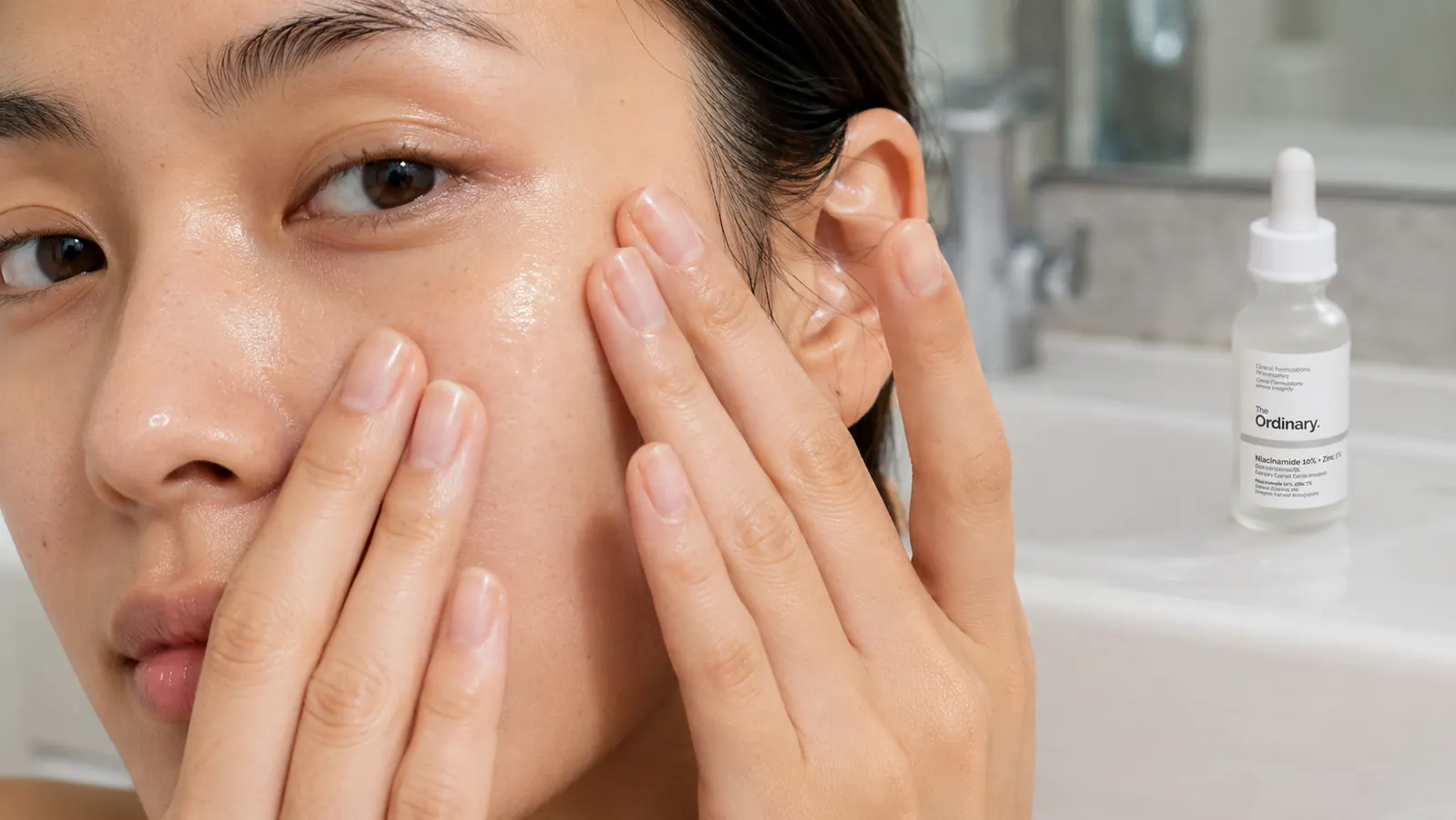
The dropper on The Ordinary Niacinamide bottle is calibrated for small amounts. Three to four drops is all you need for full-face coverage. More product does not produce more effect with a serum like this. Niacinamide absorption has a practical ceiling at the skin surface concentration, so applying extra just means the excess sits on top of your skin, which for oily skin types can contribute to a congested or pilled texture when you try to layer moisturizer over it.
Dispense the drops into your palm, then press the serum across your forehead, cheeks, nose, and chin in a gentle patting motion rather than rubbing. Rubbing a serum moves it across the surface; pressing it helps it move into the skin. Around the eye area, where the skin is noticeably thinner, press very lightly and avoid pulling or dragging. You do not need to work it into the under-eye area specifically unless your concern is dark circles or texture there, since the primary targets for niacinamide tend to be oilier zones.
If you are brand new to niacinamide, consider starting with two drops for the first week rather than jumping straight to four. A small percentage of people, especially those with reactive skin, notice a brief flushing or tingling sensation when first using a 10% concentration. This is a temporary vascular response, not an allergic reaction, and it typically resolves within a few days as the skin adjusts. Starting with a lower dose lets you confirm how your skin responds before using the full amount.
Step 3: Wait Two Minutes Before Layering Anything Over It
The most consistent mistake I see in people who say their serum is not working is stacking products too quickly. A water-based serum needs roughly 90 seconds to two minutes to absorb before you add a heavier product on top. If you apply moisturizer immediately, you are essentially pushing the serum back out of the skin and blending it into the moisturizer layer before either has had a chance to penetrate properly.
Set a timer the first few times until waiting feels automatic. The skin will shift from a slightly wet or slick feeling to a drier, slightly tacky finish as the serum absorbs. That finish is the cue that it is ready for the next layer. In a morning routine, two minutes is also just enough time to brush your teeth or put on a shirt, so it is not dead time if you keep your routine in order.
Step 4: Follow with a Moisturizer, Then SPF in the Morning
Once the serum has absorbed, apply a lightweight moisturizer. For oily or blemish-prone skin, a gel-cream or water-gel formula labeled non-comedogenic works well here. The moisturizer's function in this sequence is to seal in the serum and keep the skin barrier intact, not to add more actives. Using a very heavy or occlusive moisturizer over niacinamide can interfere with how cleanly the serum sets, so lighter textures tend to perform better in this position.
In the morning, SPF goes on last, over everything else. Niacinamide does not increase photosensitivity the way retinol or exfoliating acids do, so it is fine to use it in a morning routine without adjusting your sun protection behavior. That said, sun exposure is the primary driver of uneven tone and persistent dark marks, which are two of the things niacinamide is working to address. Applying SPF 30 or higher every morning is not optional if you want the serum to have any visible effect on pigmentation.
At night, SPF is skipped and you can finish with a slightly richer moisturizer. Niacinamide works in both morning and evening routines, and some people use it twice daily without issue. If you are also introducing retinol at night, apply the niacinamide serum first, let it absorb fully, then apply the retinol on top. Research suggests niacinamide can reduce the redness and peeling that often accompanies early retinol use, which makes the pairing useful if you are building a retinol tolerance.

Step 5: Be Consistent for at Least Six Weeks Before You Judge the Results
Niacinamide is not a product where results appear in a week. The mechanisms it works through, sebum regulation, interference with melanin transfer, barrier reinforcement, all operate on a cellular timescale. When I used The Ordinary Niacinamide 10% + Zinc 1% daily for five months on combination skin, the first noticeable change was reduced midday oiliness at around week three. Pore appearance improved visibly by week six to seven. Post-blemish marks began fading more noticeably around month two. Those timelines are consistent with what the clinical literature on topical niacinamide suggests.
The most common reason people conclude that niacinamide does not work for them is that they stopped using it before the six-week mark. Two or three weeks is not enough time to see the full effect of any serum targeting tone, texture, or pore size. If you make it to six weeks with daily use and see no meaningful change, that is a reasonable point to reassess whether the product or routine is right for your skin. But stopping at three weeks and deciding it failed is a false negative.
A practical habit that helps: take a photograph in consistent lighting before you start, then again at weeks three and six. Skin changes gradually, and the human eye adjusts to small daily differences without registering them as progress. A comparison photo tends to show changes that feel invisible in the mirror. For a deeper look at what changes across a longer testing window, the 10 reasons niacinamide serum reduces pores and blemishes article covers the underlying mechanisms and what to expect at each stage.
What Else Helps
Niacinamide does more when the rest of your routine is not working against it. The two biggest saboteurs I have seen are exfoliating too aggressively, which causes chronic barrier disruption that keeps skin in a reactive state, and layering niacinamide directly on top of a high-concentration vitamin C serum in the same application. The concern about niacinamide and vitamin C forming a compound that causes flushing is overstated in recent research, but if you are using a 15% or higher L-ascorbic acid formula, spacing them into morning and evening routines keeps both more stable and effective. Beyond product interactions, staying well hydrated, avoiding touching your face throughout the day, and swapping out your pillowcase twice a week all have measurable effects on blemish-prone skin that even a well-applied serum cannot fully compensate for on its own. The serum does its part when you give it the right conditions to work in.
The first noticeable change was less midday shine at around week three. By week six, pore appearance had improved in a way I could actually photograph. I wish someone had told me earlier to just be patient and let it work.
Six weeks of consistent use is the real test. Most people quit at three.
The Ordinary Niacinamide 10% + Zinc 1% is an easy addition to any existing routine. It layers cleanly under moisturizer, tolerates most skin types including sensitive, and has over 58,000 Amazon reviews from people who stuck with it. Check today's price and confirm it is in stock.
Amazon Check Today's Price on Amazon →