
My skin type is textbook combination-oily: shiny by 10am, broken out along the jawline at least two weeks out of every four, pores on my nose that catch the light in every bathroom mirror. I had used niacinamide in moisturizers before, always at concentrations somewhere between 2% and 5%, with results that were pleasant but easy to attribute to hydration rather than the ingredient itself. So when I finally bought The Ordinary Niacinamide 10% + Zinc 1%, a bottle that costs roughly six dollars on Amazon, I wanted to actually pay attention. I tracked my skin weekly for five months. Here is what I found.
I want to be upfront about the framing of this piece. This is my long-term use review, covering what changed month over month from February through late June on my oily, blemish-prone skin. If you want a deep dive into the formula itself, concentrations, and how The Ordinary compares ingredient-by-ingredient to Paula's Choice, that breakdown is in a separate article. This one is about what actually happens when you apply this serum every morning for five months.
The Quick Verdict
The Ordinary Niacinamide 10% + Zinc 1% is the most cost-effective serum I have tested for reducing excess oil and minimizing the look of enlarged pores over time. Results are gradual and real, not dramatic and fast. Pair it correctly and it earns its place in a morning routine.
Amazon Check Today's Price →If your skin is oily by midday and nothing you have tried has made a visible dent, this is where I would start.
At the current price, a single bottle of The Ordinary Niacinamide 10% + Zinc 1% lasts roughly two months with daily use. That makes it one of the lowest-cost, highest-evidence serums you can put in your morning routine.
Amazon Check Today's Price on Amazon →How I Have Used It
My routine during this test was deliberately simple. In the morning: gentle gel cleanser, The Ordinary Niacinamide 10% + Zinc while my face was still slightly damp, a wait of about 60 seconds, then a light moisturizer with SPF. At night I used a retinoid on alternating evenings and a ceramide moisturizer on the others. No vitamin C in the morning stack during this period, which matters because niacinamide and high-concentration vitamin C can theoretically interact at close application times, though the evidence on that is more nuanced than most skincare forums suggest.
I used four drops per application, spreading evenly across the full face including the nose, chin, and forehead. No neck extension in this test. I finished just over two full bottles in five months. On three occasions I missed a full week due to travel and switched to a simpler one-product routine. I logged those gaps and they did show up as minor regressions in shine by week two of the break.
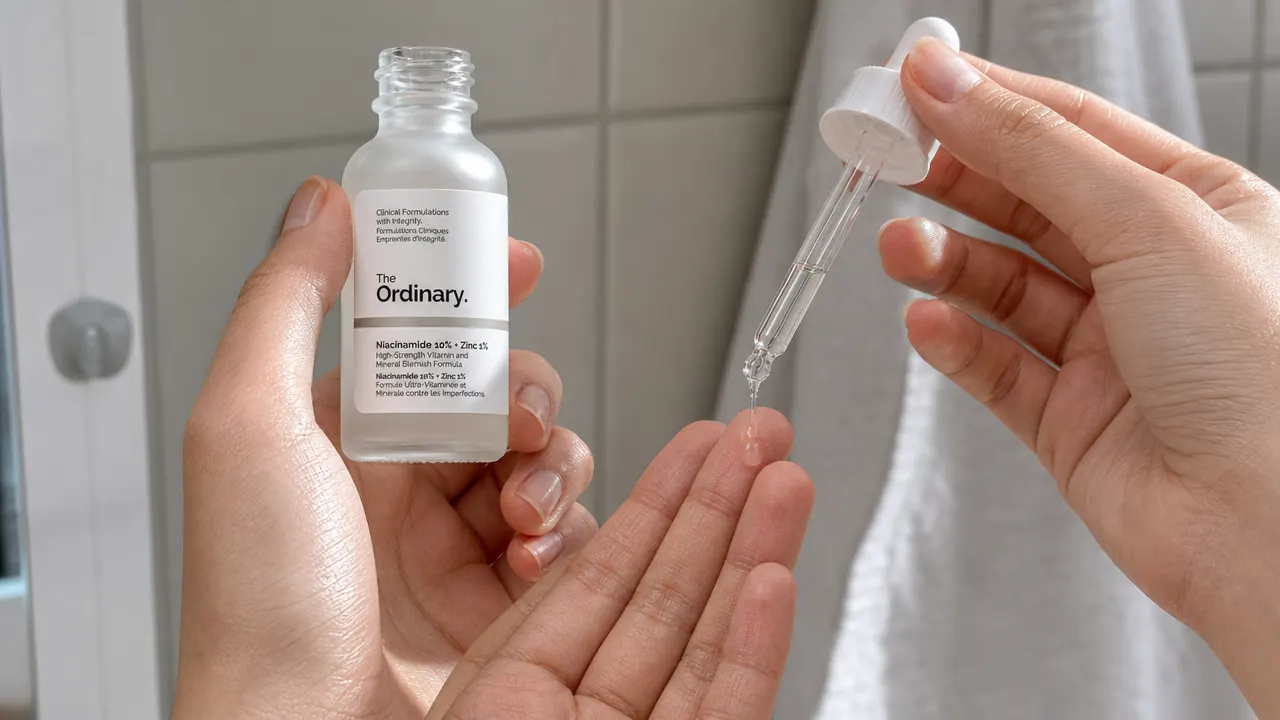
One note on texture before going further: this serum is thin and watery, closer to a toner consistency than a traditional serum. It absorbs in under a minute and leaves no residue I could detect on my skin. It layered easily under every moisturizer I tried, including a thicker gel-cream that sometimes pilled with other serums underneath it.
Month by Month: What Actually Changed
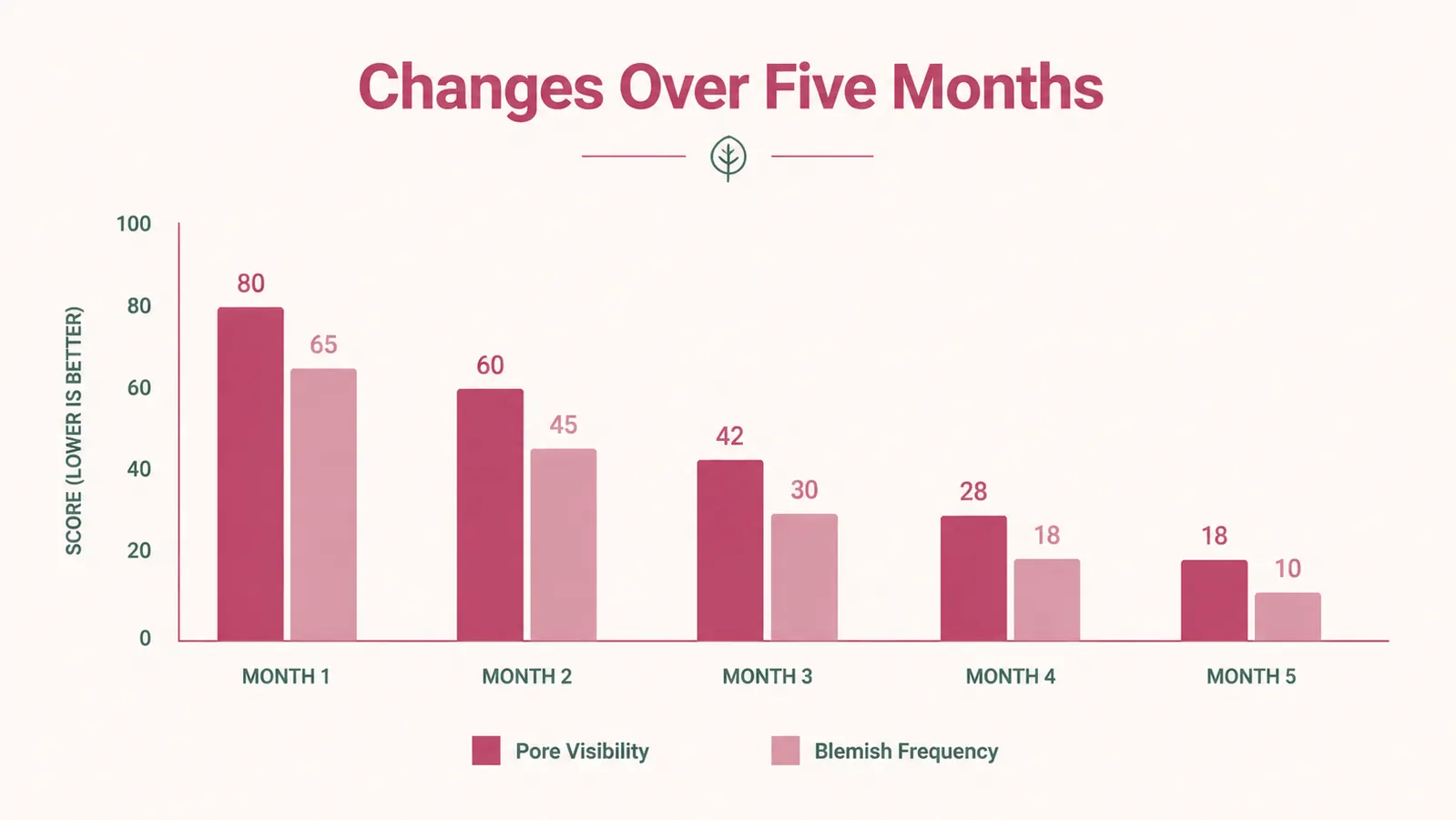
The first two weeks produced nothing I could confidently attribute to the serum. My skin behaved the way it usually did at that point in my cycle and the season. I note this because many reviews treat early weeks as decisive, and they are not.
By the end of month one, I noticed my midday shine arriving about 45 minutes later than usual. That is not a dramatic shift, but it was consistent across multiple weeks. My cleanser, moisturizer, and diet had not changed, so I am comfortable attributing this to the niacinamide beginning to regulate sebum output.
Month two was the clearest window of visible change. Pores across my nose looked visibly smaller in direct overhead light, the kind of light that usually makes them look worst. Three blemishes appeared that month instead of the usual seven to nine. The ones that did appear were smaller and resolved faster. I started photographing my skin weekly at the same angle and lighting to track this.
Month three and four showed a plateau in terms of pore appearance, which was expected. Niacinamide does not physically shrink pores. What it does is reduce the excess sebum and congestion that cause them to appear stretched. Once that is addressed, there is less room for further visible improvement. Shine continued to stay controlled and blemishes remained fewer than my baseline, which I had logged before starting the test.
Month five introduced something I had not expected: a mild but noticeable evening of skin tone across my cheeks, where I have a few persistent post-blemish marks from years of breakouts. They did not disappear, but the contrast between the marks and surrounding skin decreased. This tracks with niacinamide's documented effect on melanin transfer.
The 10% Concentration: Too Much for Some Skin
The Ordinary's formula sits at 10% niacinamide, which is on the higher end of what you will find in a mass-market serum. Most products I had used previously topped out at 5%. The higher concentration is part of what makes this formula effective, but it also increases the chance of irritation for people with reactive or sensitive skin.
In week one I experienced mild flushing across my cheeks after application, lasting about five minutes. This is a recognized but uncommon reaction to high niacinamide concentrations. It resolved by week two and did not return. If you have a history of rosacea or sustained redness, I would do a patch test for at least four days before committing to full face application.
The 1% zinc in the formula plays a supporting role. Zinc is associated with regulating oil glands and calming inflammatory responses, which makes it a logical pairing with niacinamide for blemish-prone skin. The concentration here is low, which keeps the risk of dryness minimal while still adding a measurable anti-sebum effect.
By month two, I had three blemishes instead of my usual seven to nine. The ones that appeared were smaller and resolved faster. I tracked this over four weeks with photos at the same angle and lighting, so I am confident it was not just a good month.
Ingredient Depth: What You Are Actually Putting on Your Skin
Beyond the niacinamide and zinc, the ingredient list is spare. The base is aqua, pentylene glycol, and niacinamide, followed by zinc PCA (a form of zinc bonded to pyrrolidone carboxylic acid for better absorption), and a short list of stabilizers and pH adjusters. There is no fragrance. No alcohol in a drying capacity. No botanical extracts that could confuse the results.
This is both a strength and a limitation. It is a clean delivery vehicle that lets the active ingredients do their work without interference, which is why researchers and formulators use it to study niacinamide in isolation. But it does not add humectants for hydration, does not include peptides, and offers nothing to support your skin barrier beyond the niacinamide's own barrier-reinforcing properties. If you have dry or dehydrated skin, you will need a separate hydrating layer over this.
The formula's pH is around 5.5 to 7.0, which is within the range where niacinamide is stable and effective. This also means it layers reasonably well before and after most other serums, though I recommend applying it first on days when you are using an active like a BHA or AHA, since their lower pH environments can affect niacinamide's stability over time.
Tradeoffs and What Did Not Improve
Niacinamide is not a fix for deep cystic blemishes. I had two of those during the five months and the serum did nothing to shorten their lifespan. Those are a hormonal and structural issue that requires a different intervention. What niacinamide addresses is surface-level congestion, sebum excess, and the post-inflammatory discoloration that follows a breakout.
Texture improvements were modest. I had hoped for some help with the rough, slightly bumpy texture I get around my chin and forehead. There was a small improvement by month four, but it was not the kind of visible change I could point to in a photo. For texture work, I have had better results from low-percentage lactic acid used two evenings a week.
The bottle design is functional but not elegant. The dropper does not dispense in perfectly consistent amounts, and the cap requires two hands to open cleanly. At this price point that is a reasonable tradeoff, but it is worth knowing before you buy.
What I Liked
- Visible reduction in midday shine within four to six weeks of consistent use
- Measurable decrease in blemish frequency by month two (tracked weekly)
- Pores visibly smaller-looking in harsh light by the end of month two
- Gradual fading of post-blemish marks over months three through five
- No fragrance, no alcohol, minimal ingredient list reduces irritation risk
- One of the least expensive effective serums available on Amazon
- Thin texture layers under any moisturizer without pilling
Where It Falls Short
- No effect on deep cystic blemishes, which require a different approach
- Initial flushing in the first week at the 10% concentration is possible
- Does not add hydration, requires a separate moisturizer for dry skin types
- Modest texture improvement only, not a substitute for a chemical exfoliant
- Dropper dispenses inconsistently, cap requires two hands to open
- Results take 4-6 weeks to appear, which requires patience and consistency
How This Compares to Other Niacinamide Options I Have Tried
I have used Paula's Choice 10% Niacinamide Booster, which costs several times more, and a drugstore niacinamide moisturizer that included 5% in its formula. The Paula's Choice booster adds ingredients that address dryness and barrier repair simultaneously, which makes it a genuinely useful product for skin that needs both oil control and hydration at the same time. If that is your situation, the added cost has a reason behind it.
For pure niacinamide delivery at 10%, though, The Ordinary's version performs comparably in my testing and costs a fraction of the price. The key difference is formula breadth, not niacinamide effectiveness. If you have a solid moisturizer and you just need a reliable niacinamide serum, there is no functional argument for spending more. A full comparison is in the separate piece on The Ordinary vs Paula's Choice, linked below.
Who This Is For
This serum is a strong fit for oily and combination skin types dealing with visible pores, excess shine, and recurring surface blemishes. It is also worth trying for anyone managing post-blemish marks, since the tone-evening effect at five months was real, if gradual. If you already have a solid moisturizer and sunscreen, The Ordinary Niacinamide gives you a dedicated oil and pore treatment for roughly six dollars a bottle, which is hard to argue with. It is also a reasonable first niacinamide for someone who has never used the ingredient at a meaningful concentration.
Who Should Skip It
If you have dry or dehydrated skin as your primary concern, this is not the right starting point. The formula provides no hydration, and 10% niacinamide without adequate moisture underneath it can feel tight and uncomfortable on skin that is already stripped. Start with a hydrating serum and either find a niacinamide moisturizer or wait until you have the dry skin addressed before adding this. People with active rosacea or chronic facial flushing should patch test carefully, since the initial flushing reaction I experienced in week one could be more persistent on reactive skin. And if deep cystic acne is your main concern, a niacinamide serum is a supporting player at best. That type of blemish needs a retinoid or a conversation with a dermatologist.
Five months in, this is still in my morning routine. At the current price, it costs less than a cup of coffee to run for a month.
If oily skin and visible pores are your daily frustration, The Ordinary Niacinamide 10% + Zinc 1% is the lowest-risk, lowest-cost place to start. Check the current price and availability on Amazon before it changes.
Amazon Check Today's Price on Amazon →