
If you are researching niacinamide serums, you will run into this comparison eventually. The Ordinary Niacinamide 10% + Zinc 1% costs a fraction of what Paula's Choice 10% Niacinamide Booster costs for the same volume. Both deliver the same headline concentration of the active ingredient. So the question is a straightforward one: what, if anything, does the price premium buy you?
I have used both. I spent about four months rotating them on oily, blemish-prone skin before writing this. My goal was not to declare a winner because one brand is trendier right now, but to find out whether the formulas actually behave differently on skin. Here is what I found.
Before I get into the formula breakdown, the short answer: for most people with oily or combination skin, The Ordinary Niacinamide 10% + Zinc 1% is the right call. The longer answer depends on your skin type, your routine, and how you feel about spending more when the active ingredient is identical. Read through the sections below and you will have a clear picture of which one belongs on your shelf.
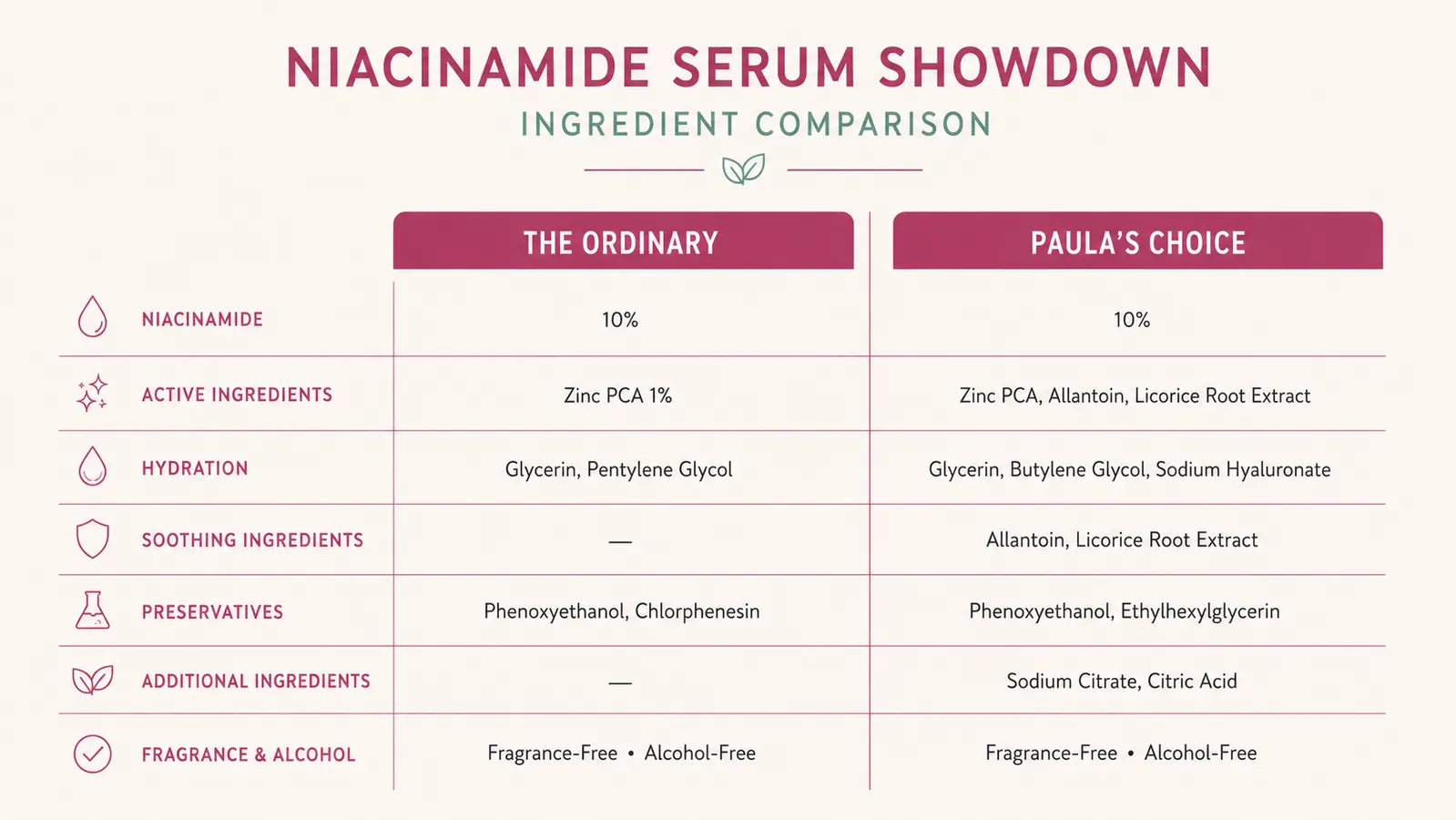
| The Ordinary Niacinamide | Paula's Choice 10% Niacinamide Booster | |
|---|---|---|
| Price tier | Budget for 30ml | Premium tier |
| Niacinamide % | 10% | 10% |
| Added actives | Zinc PCA 1% (sebum regulation) | Adenosine, Panthenol, Vitamin C derivative |
| Texture and finish | Thin, watery serum, slightly tacky on first touch | Lightweight fluid, smoother glide, no tackiness |
| Best for | Oily, blemish-prone, or combination skin | All skin types, including dry and sensitive |
| Layering ease | Goes on before moisturizer, wait 30 seconds | Layers easily under or over most serums |
| Bottle format | Dropper (30ml) | Pump (20ml) |
| Fragrance | Fragrance-free | Fragrance-free |
| Cruelty-free | Yes (PETA certified) | Yes |
If you want to test 10% niacinamide without spending premium prices to find out if it works for you, this is the one to start with.
The Ordinary Niacinamide 10% + Zinc 1% has over 58,000 Amazon reviews and a 4.7-star average. At this price, there is no real risk in trying it.
Amazon Check Today's Price on Amazon →The Core Formula: What Is Actually Different
Both serums are built on the same active: niacinamide (vitamin B3) at 10%. At that concentration, the research is reasonably strong. Niacinamide is associated with reduced sebum production, smaller-looking pores, calmer redness, and more even skin tone over several weeks of consistent use. Neither formula does anything the other cannot in that specific department.
Where they diverge is in what else they include. The Ordinary adds zinc PCA at 1%. Zinc PCA is an astringent salt that helps regulate oil production at the surface and has some antimicrobial properties. It makes the formula lean hard into oily and blemish-prone skin. If sebum control is your primary goal, that addition is doing real work.
Paula's Choice goes in a different direction. The formula includes adenosine, which has a small body of research supporting its role in skin firming and barrier support, plus panthenol (vitamin B5) for hydration and a vitamin C derivative for brightening. It is a broader-spectrum formula, which suits people who want one serum to do several things at once. That broader approach also explains most of the price gap. You are paying for additional actives, not a better delivery of niacinamide.
Texture and Daily Use: How They Actually Feel
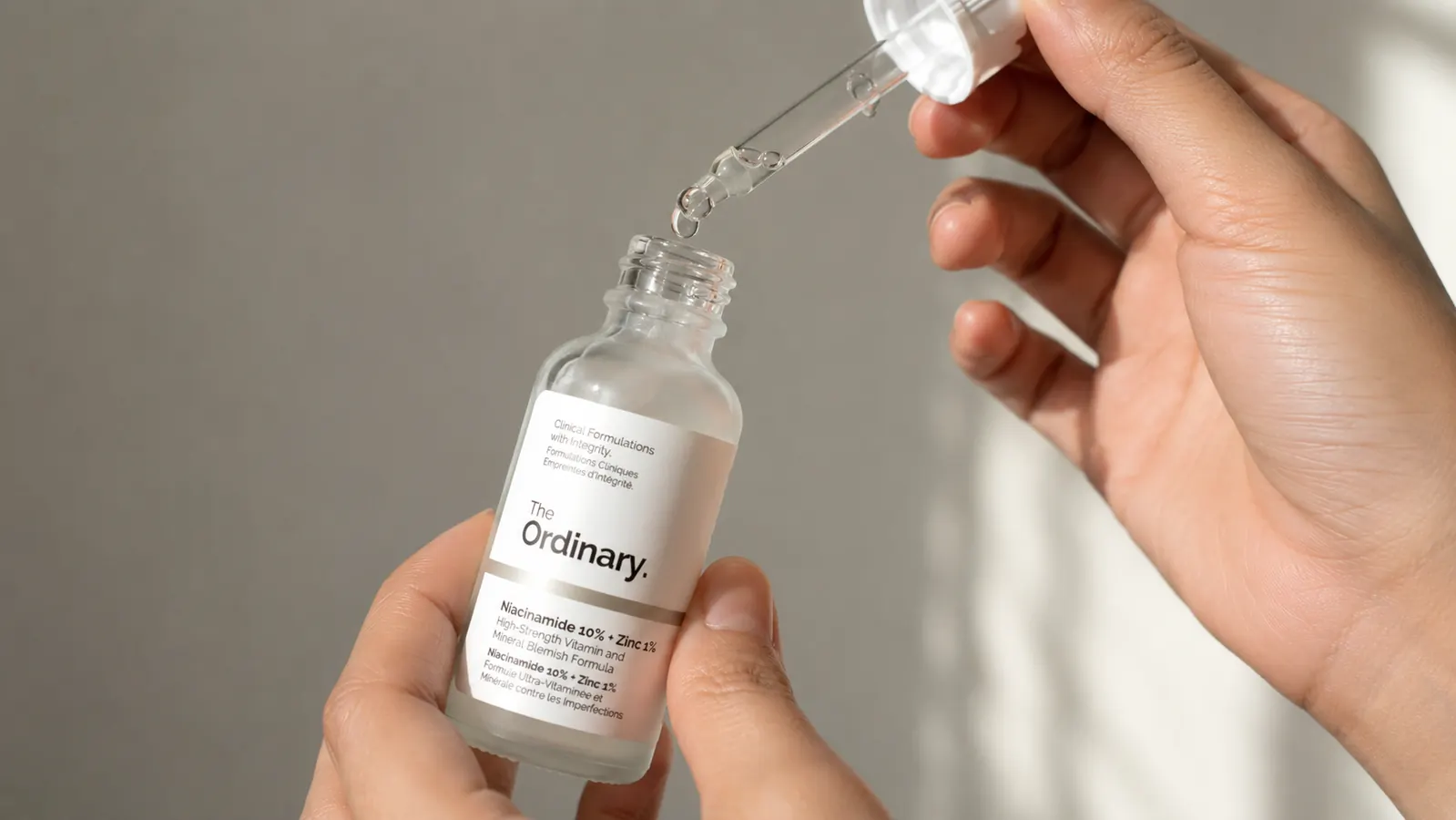
The Ordinary version is thinner than you might expect. It runs almost like water in the dropper and applies easily. There is a faint tackiness in the first thirty seconds, but it disappears once absorbed. Under a moisturizer and sunscreen, I did not notice it at all. The dropper makes it easy to use four or five drops, which covers the full face without waste.
Paula's Choice has a noticeably smoother glide. The pump dispenses a consistent amount and the fluid layers well under or over other actives. There is no tackiness. It feels more like a traditional serum and less like a functional ingredient dissolved in water, which is essentially what The Ordinary is. If texture matters to you, the Paula's Choice experience is more polished.
I did not find that the texture difference changed results in any measurable way. My skin did not know the difference. What my wallet knew is that the Paula's Choice ran out in about five weeks at similar daily usage, while The Ordinary lasted nearly three months.
Both serums deliver 10% niacinamide. What you are deciding is whether the added actives in the Paula's Choice formula are worth paying seven times more per milliliter.
Where The Ordinary Wins
Value is the obvious answer, but it is more specific than that. The Ordinary wins on every axis that matters for oily or blemish-prone skin specifically. The zinc PCA addition is genuinely useful for sebum regulation, and that is the skin type this formula is built for. If you have combination or oily skin with visible pores and occasional breakouts, the active ingredient pairing here is more targeted than the Paula's Choice formula. You are not overpaying for hydrating and brightening ingredients you may not need.
The Ordinary also wins on accessibility. At a low price point, you can keep a backup in the cabinet and use it generously without anxiety about running out. That consistency, applying it every morning without rationing, is what produces results with niacinamide. A product that gets used daily beats a better product that gets conserved. The 4.7-star rating across nearly 59,000 Amazon reviews tells you this formula is working for a very large number of people across a wide range of skin types.
There is also a practical argument for starting here if you are new to niacinamide. A small number of people find that 10% is too high a concentration and experience temporary flushing when they first introduce it. Figuring that out on a budget bottle rather than a premium bottle is a reasonable approach, regardless of your skin type.
Where Paula's Choice Wins
Paula's Choice earns its price in two situations. The first is dry or sensitive skin. The zinc in The Ordinary can feel slightly drying on skin that is already low on oil. It is not a dramatic effect, but over weeks it is noticeable. The Paula's Choice formula, with panthenol and a focus on barrier support, is more comfortable on dry or sensitized skin types.
The second situation is layering complexity. If you are trying to minimize the number of products in your routine and want one serum to handle pore refinement, hydration, early firming, and some brightening at the same time, Paula's Choice is genuinely doing more work in a single bottle. It is a well-formulated product that makes sense if you have the budget and prefer simplicity over a multi-step routine. The pump format is also more hygienic than a dropper for some users.
Paula's Choice also has a stronger track record on combination-to-dry skin specifically. The panthenol acts as a humectant alongside the niacinamide, which means the serum is adding a small amount of hydration rather than working in a purely astringent direction. On skin types that sit in a dry-combination zone rather than a true oily profile, that distinction changes the comfort level over a full routine.
Potential Drawbacks on Both Sides
Neither formula is perfect. The Ordinary has a known issue with pilling. If you apply it before a silicone-heavy primer or moisturizer, it can ball up and come off in little rolls. The fix is simple: let it absorb for thirty seconds before layering anything on top, and avoid silicone-rich products directly over it. That is a minor inconvenience but worth knowing before your first morning of running late.
Paula's Choice is a genuinely good product, but the value calculation does not hold up as a daily maintenance serum for most people. If you have used The Ordinary and found it effective, there is no compelling reason to pay seven times more per milliliter for the same niacinamide concentration. If you have sensitive or dry skin and The Ordinary felt too drying, Paula's Choice may be the better fit, but so might a 5% niacinamide serum from any number of brands at a lower price point.
One thing both formulas share: neither is a quick fix. Niacinamide typically takes four to eight weeks of consistent daily use before you see meaningful changes in pore appearance and sebum levels. Impatience is the main reason people abandon it before it has a chance to work. Whichever formula you choose, the commitment to daily application matters more than which specific bottle is in your cabinet.
Who Should Buy Which
Buy The Ordinary if you have oily, combination, or blemish-prone skin and want a targeted serum for pore refinement and sebum control. It is also the right starting point if you have never used niacinamide before and want to test whether your skin responds well before committing to a more expensive product. At this price point, there is no real barrier to entry.
Consider Paula's Choice if you have dry or sensitive skin that feels uncomfortable with zinc PCA, or if you want a single serum that layers hydration, barrier support, and mild brightening alongside the niacinamide. It makes the most sense if you are already spending on a curated, fewer-products routine and the price fits your budget. It is a quality product. It is just not seven times better.
If you are looking for more context on how The Ordinary Niacinamide performs over five months of consistent daily use, I covered that in detail in my long-term review of The Ordinary Niacinamide 10% + Zinc. And if you want to understand what niacinamide is actually doing at the skin level, 10 reasons niacinamide serum reduces pores and blemishes breaks down the mechanisms clearly.
For most people, The Ordinary gets you the same 10% niacinamide at a fraction of the cost. It is the practical choice.
Over 58,000 reviewers on Amazon. 4.7 stars. A formula built specifically for oily and blemish-prone skin. If you are still weighing the two, this is where to start.
Amazon Check Today's Price on Amazon →