

If you have been using a vitamin C serum for months and your skin looks exactly the same, you are probably not doing it wrong because you picked a bad product. You are most likely doing one or two specific application steps incorrectly, and those steps are what determine whether vitamin C actually deposits into the skin or just sits on top and washes off. I spent three years as a retail skincare buyer before I started reviewing independently, and the single most common complaint I heard from customers was that vitamin C did nothing for them. Almost every time, the issue was method, not product.
Vitamin C is genuinely effective for uneven tone, dull texture, and post-breakout marks. The research on L-ascorbic acid and its derivatives is solid. But it is also pH-sensitive, oxidation-prone, and reactive with several other common actives. Get those conditions wrong and you have spent money on a brown bottle of nothing. This guide walks through the five steps I use with the Tree of Life Vitamin C Skin Care Set, a 4.4-star, 143,000-review serum that I have tested on my own combination skin for the past several months. The steps apply to any vitamin C product, but they are specific enough to actually follow.
If you want a low-cost, well-reviewed vitamin C serum to practice these steps with, this is the one I use.
The Tree of Life Vitamin C set has over 143,000 reviews on Amazon. It includes a face serum, a facial oil, and a moisturizer in one kit, all under fifteen dollars. It is a forgiving formula for beginners and experienced users alike.
Amazon Check Today's Price on Amazon →Step 1: Cleanse with a Gentle, Low-pH Cleanser Before Applying
Vitamin C, particularly L-ascorbic acid, works best at a low pH, somewhere between 2.5 and 3.5. Your skin's natural surface pH sits around 4.5 to 5.5 after cleansing with a well-formulated product. That is close enough. But if you cleanse with something alkaline, a bar soap or a foaming wash that strips the skin and feels tight afterward, you push your skin's surface pH higher, which reduces the amount of vitamin C that can actually absorb. This is not a dramatic difference, but it is real over time.
I use a fragrance-free gel cleanser that rinses clean without that squeaky feeling. After rinsing, I pat dry and wait about 30 seconds. I do not wait the full 20 minutes that some older routines recommend. That advice came from early L-ascorbic acid research and is less relevant with modern stabilized vitamin C derivatives. If your serum uses sodium ascorbyl phosphate or ascorbyl glucoside, which are more stable forms of vitamin C, you can apply almost immediately after cleansing.
One practical note: if your water is very hard and leaves a mineral residue on your skin, your effective pH after cleansing may be higher than you think. A light swipe with a pH-balanced toner or micellar water on a cotton round before the serum can help. I only do this in the summer when I am sweating more and cleansing twice a day.
Step 2: Apply to Completely Dry Skin in a Thin, Even Layer
This is the step most people get wrong. The standard skincare advice is to apply serums to damp skin to help them absorb. That works well for hyaluronic acid, which needs water to draw from. It does not work well for vitamin C. When vitamin C is diluted by excess water on the skin's surface, it disperses unevenly and a portion of it oxidizes before it can penetrate. You want a thin film of serum on dry skin, not a layer spread over droplets of water.
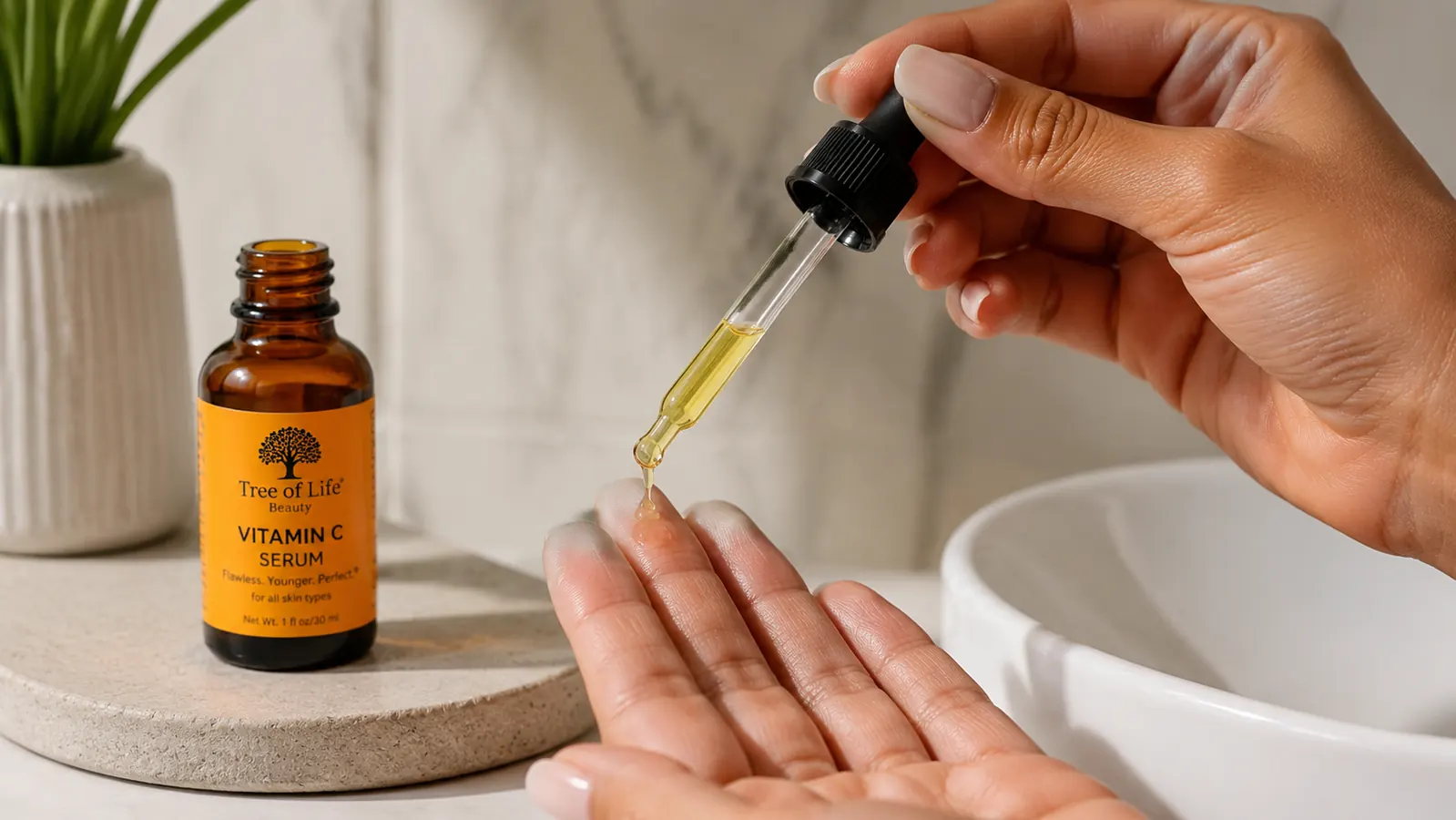
I dispense two to three drops into my palm, not onto my fingertips. I then press my hands together lightly and press the serum onto my face in sections: cheeks, forehead, chin, nose. I do not rub in circles. I press and lightly smooth outward. The entire application takes about 20 seconds. If you have combination or oily skin, start with two drops. Dry skin can usually handle three without pilling.
Wait a full 60 seconds before moving to the next step. You do not need to wait longer than that, but rushing immediately to moisturizer can dilute the serum before it has started to work. I set a timer on my phone the first few times I did this. It felt unnecessary until I realized I had been skipping the wait entirely for months.
Step 3: Layer Correctly, Thinnest to Thickest
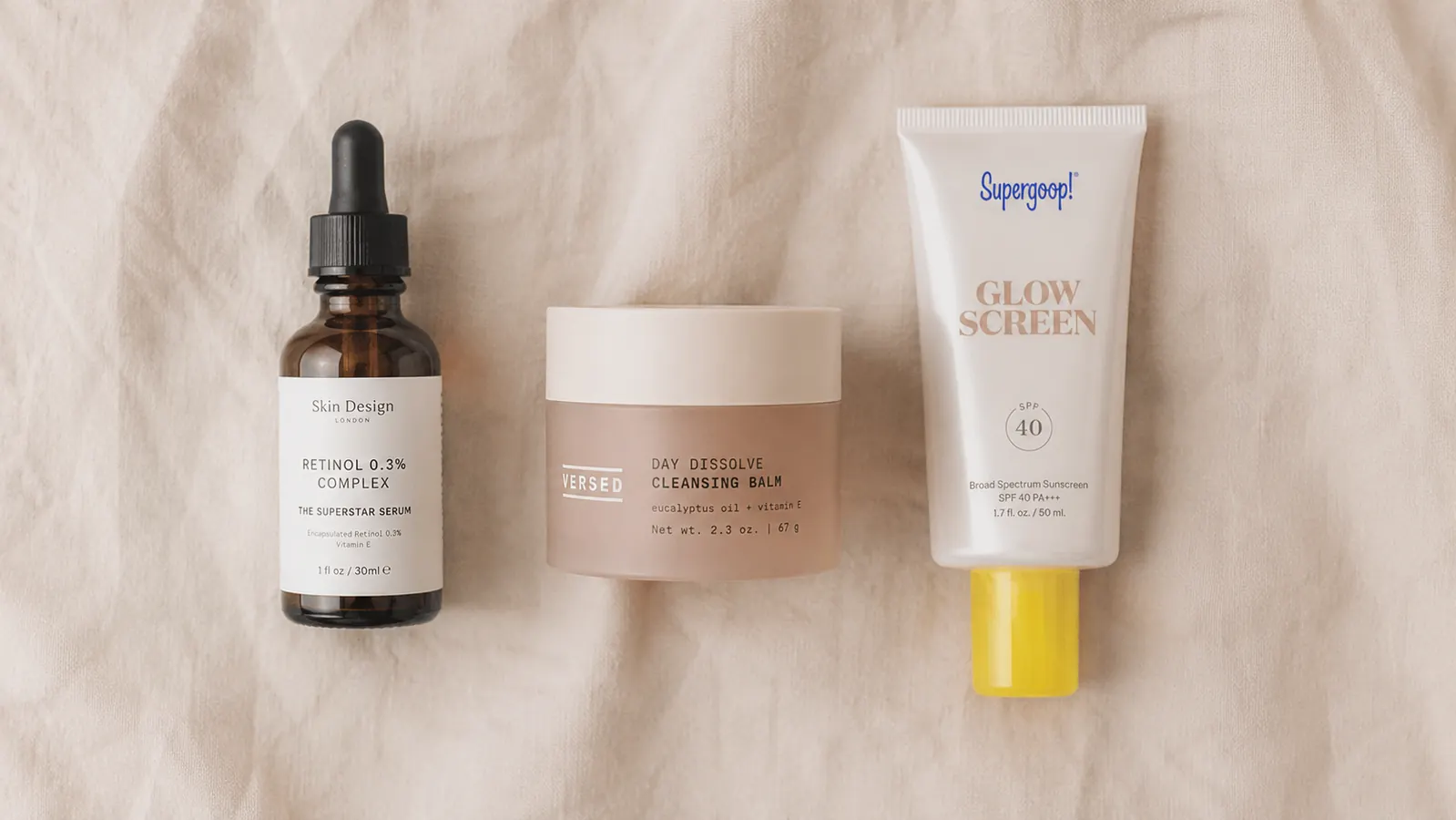
Vitamin C serum goes on before moisturizer and long before SPF. The general rule for skincare layering is thinnest texture first, thickest last. Serum is thinner than moisturizer, which is thinner than a physical sunscreen. If you apply moisturizer first, you create a partial barrier that reduces how much vitamin C reaches the skin. Not a complete barrier, but enough to matter when you are trying to get consistent results.
With the Tree of Life set, the order I use each morning is: serum, then the included facial oil, then the moisturizer, then SPF. If you are not using a multi-step vitamin C kit, the order is simply: vitamin C serum, wait 60 seconds, then your regular moisturizer, then sunscreen. That is it. There is no need to add a toner between the serum and the moisturizer unless you specifically want one.
One thing I want to flag about the oil step specifically: the Tree of Life facial oil goes between the serum and the moisturizer, not on top of the moisturizer. Oil molecules are larger than serum molecules, but smaller and less occlusive than a cream. Putting oil on top of moisturizer can slow down absorption of both. This is a small detail, but it comes up often in reviews when people say the kit pilled on them. Layering order fixes it.
Step 4: Pair Vitamin C with Sunscreen Every Single Morning
This step is not optional. Vitamin C is an antioxidant, which means it neutralizes free radicals generated by UV exposure. When you apply vitamin C in the morning and then go into the sun without SPF, you are depleting the antioxidant before it has any chance to work on tone or texture. You are also leaving already-oxidized skin unprotected, which makes existing hyperpigmentation worse.
You do not need a prescription SPF or an expensive brand. A broad-spectrum SPF 30 or higher is sufficient for everyday use. I use a mineral SPF because I have sensitive skin that reacts to some chemical filters, but either type will protect the vitamin C you have just applied. The key is applying sunscreen as the last step in your morning routine and reapplying if you are outdoors for more than a couple of hours.
A note on nighttime use: some people prefer to use their vitamin C serum at night to avoid the sunscreen pairing entirely. This is a reasonable choice. Vitamin C does not make your skin photosensitive the way retinol or AHA exfoliants do. If you use it at night, it will not hurt anything. But the antioxidant pairing with morning sun exposure is the most clinically studied application window, so I stick to mornings.
Vitamin C does the heavy lifting on tone and dullness, but it only works if you protect it. Antioxidants without sunscreen is like mopping the floor with the tap still running.
Step 5: Store the Bottle Correctly and Know When to Replace It
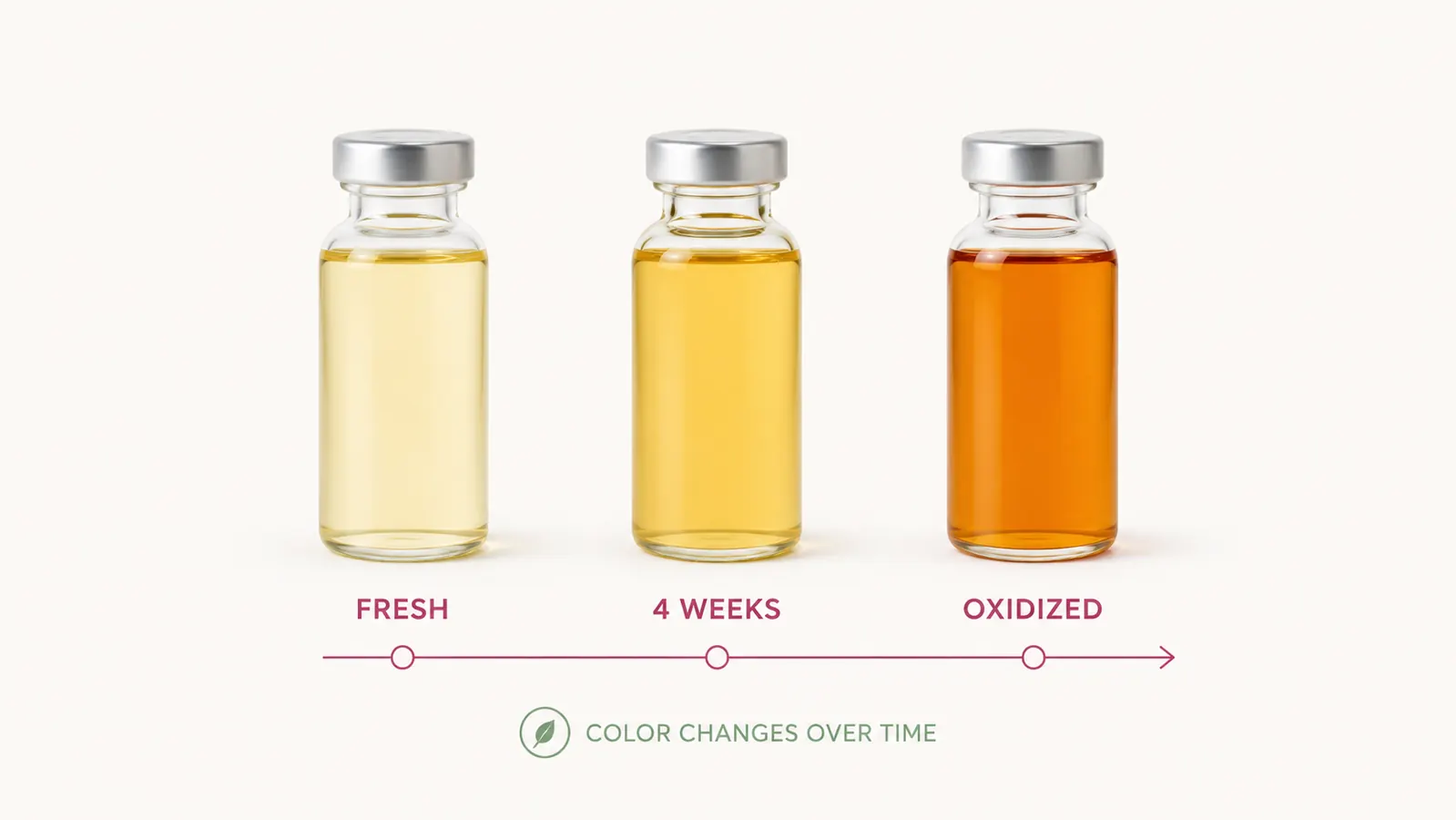
Vitamin C oxidizes when exposed to light, heat, and air. An oxidized serum turns orange or brown and loses most of its active potency. You can still use it, it will not hurt your skin, but it will not do much either. The most common reason people say vitamin C serums stop working is that they are using a product that has already turned.
Store your vitamin C serum in a cool, dry place away from direct sunlight. The inside of a bathroom cabinet works, but not the window ledge above the sink. I keep mine in a small drawer near the sink, out of the light. Do not refrigerate unless the product specifically instructs you to, because condensation from taking it in and out of the fridge repeatedly can introduce moisture into the bottle. The Tree of Life serum comes in an opaque amber bottle with a dropper top, which is a good design choice for extending shelf life.
A fresh serum should be pale yellow to colorless. If it turns orange, you can mark the bottle with the date you opened it and decide whether to replace it. Most vitamin C serums are formulated to last 3 to 6 months after opening if stored properly. I open a new bottle every 90 days whether or not the old one looks fully oxidized, because I have found that the results are noticeably better when the formula is fresh.
What Else Helps
Consistency is the single biggest multiplier for vitamin C results. Applying it three times a week will give you some benefit. Applying it every morning for eight to twelve weeks will give you noticeably different skin. If you have ever tried a vitamin C serum and given up after two weeks because nothing happened, you stopped before the timeline that the research actually supports. I started seeing a real difference in my left cheek, which has an old post-breakout mark from a bad reaction to a synthetic fragrance, around the six-week mark. The full impact on overall skin tone took closer to three months. If you are new to vitamin C and impatient, know that the timeline is real and longer than most brands admit. Pairing vitamin C with a well-formulated niacinamide serum in your evening routine, applied separately, can also support overall tone and pore appearance. Just do not mix them in the same application step, as higher concentrations of both in direct contact can occasionally cause flushing in sensitive skin types.
The Tree of Life set gives you the serum, facial oil, and moisturizer in one kit so you can test this exact layering method without buying three separate products.
With over 143,000 reviews and a 4.4-star average, it is one of the most tested vitamin C formulas available at this price. Affordable enough to commit to a full three-month trial without second-guessing the cost.
Amazon Check Today's Price on Amazon →