
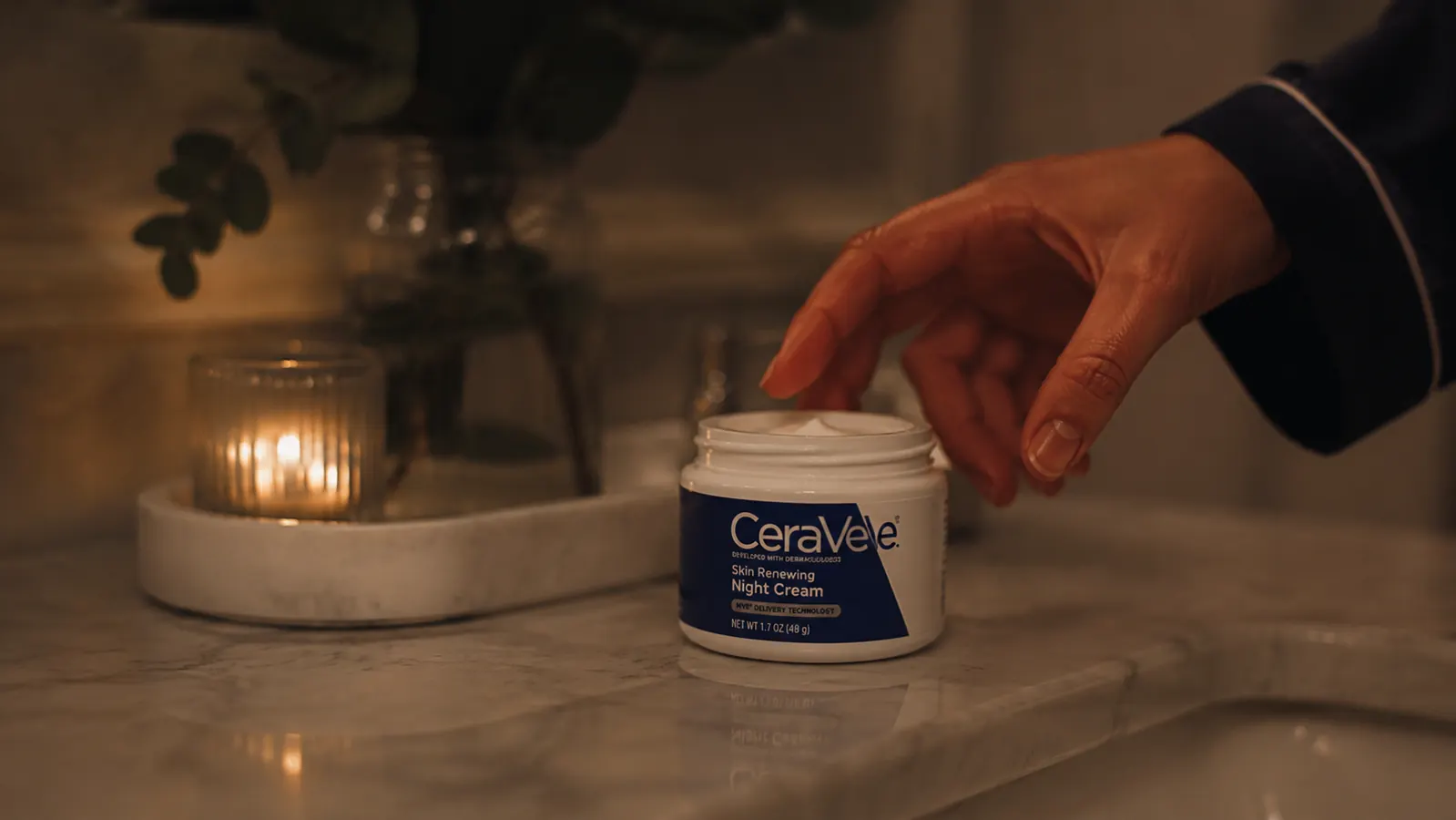
I picked up the CeraVe Skin Renewing Night Cream in early July, a few weeks into a stretch where my skin felt perpetually dull and tight by morning, no matter what I put on the night before. My skin runs combination through the warmer months and tips into dry-and-flaky territory between October and February. I was not looking for a dramatic overhaul. I wanted something with real, functional ingredients that would let my barrier do its job while I slept, without costing me a premium price per jar.
Six months later, I have used the CeraVe Skin Renewing Night Cream through two full seasons, through a cross-country trip that wrecked my barrier for a week, and through a period when I layered it under a retinoid and it had to carry more weight than usual. This review is that record. Not a first impression and not a sales pitch.
The Quick Verdict
A well-formulated peptide and ceramide night cream that consistently improves morning-skin softness and barrier comfort. Best suited to normal, dry, or barrier-compromised skin. Not the right pick if you need active exfoliation or prefer a lighter texture.
Amazon Check Today's Price →If your skin wakes up tight or dull, this is the night cream most likely to change that.
CeraVe's Skin Renewing Night Cream pairs a peptide complex with three essential ceramides and hyaluronic acid. It has over 56,000 ratings on Amazon and currently sits at 4.6 stars. Check the current price below.
Amazon Check Today's Price on Amazon →How I've Used It
My nightly application has been consistent since day one: cleanse, wait a minute, apply any serums I'm running that week, then finish with about half a pump (roughly a pea-sized amount) of the night cream across my cheeks, forehead, and chin. I avoid the eye area because the texture is rich enough that I was getting minor milia under my eyes when I got too close. I stopped and the issue resolved within two weeks.
For the first three months I ran it solo as the final step. From month four through six, I introduced a low-percentage retinoid two nights per week and kept the CeraVe as the last layer on retinoid nights. It performed well as a buffer layer, meaning I did not experience the peeling and redness that had shown up the last time I tried retinol without a solid occlusive on top.
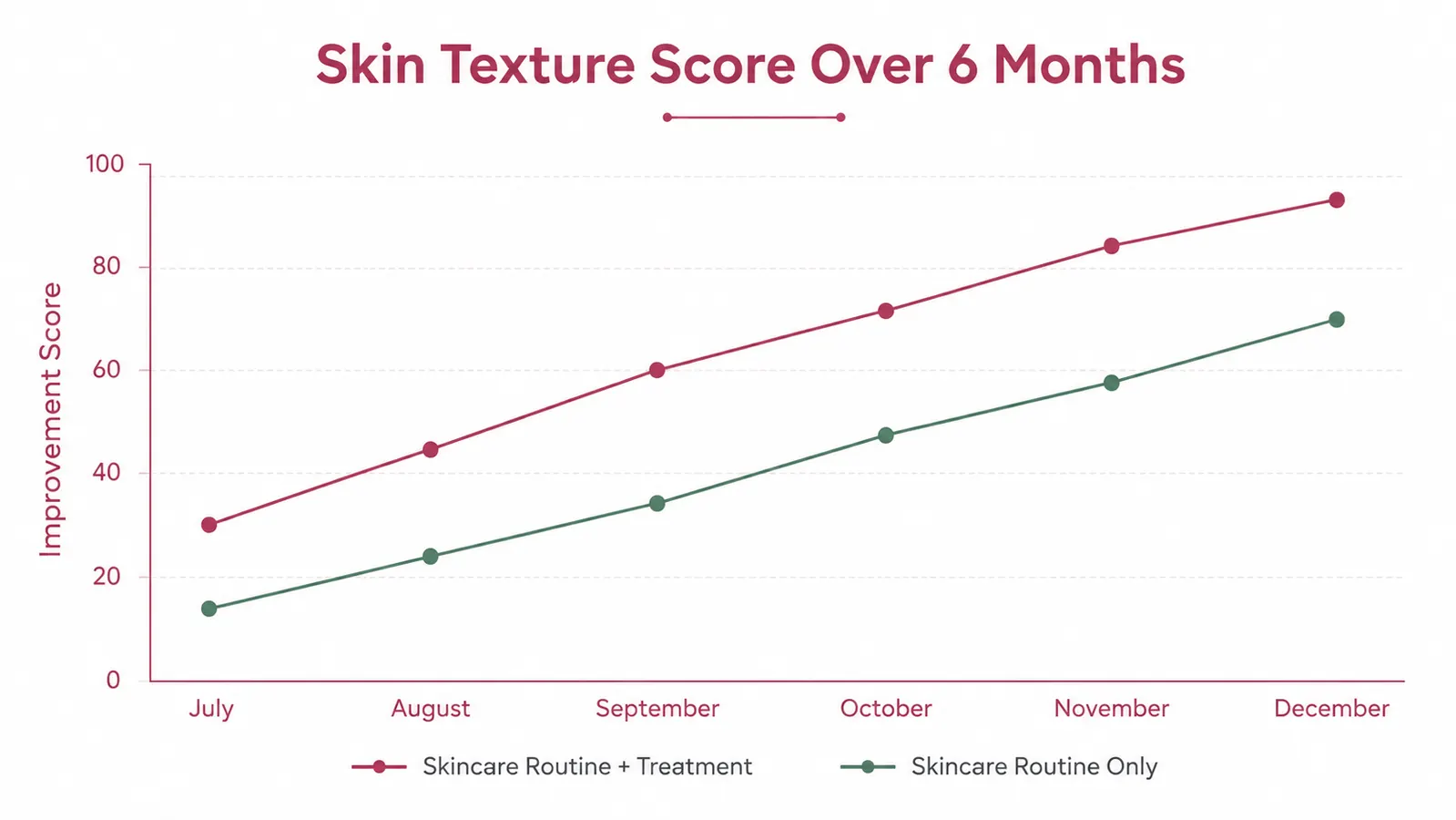
I tracked morning skin feel on a simple 1-to-5 scale (1 being tight and rough, 5 being smooth and comfortable) every morning for the first twelve weeks. That data is what the chart in this article reflects. Results were not linear. Weeks three and four were actually less comfortable than week one, possibly due to a formula adjustment period or just weather. Things normalized around week six.
What Is Actually in the Jar
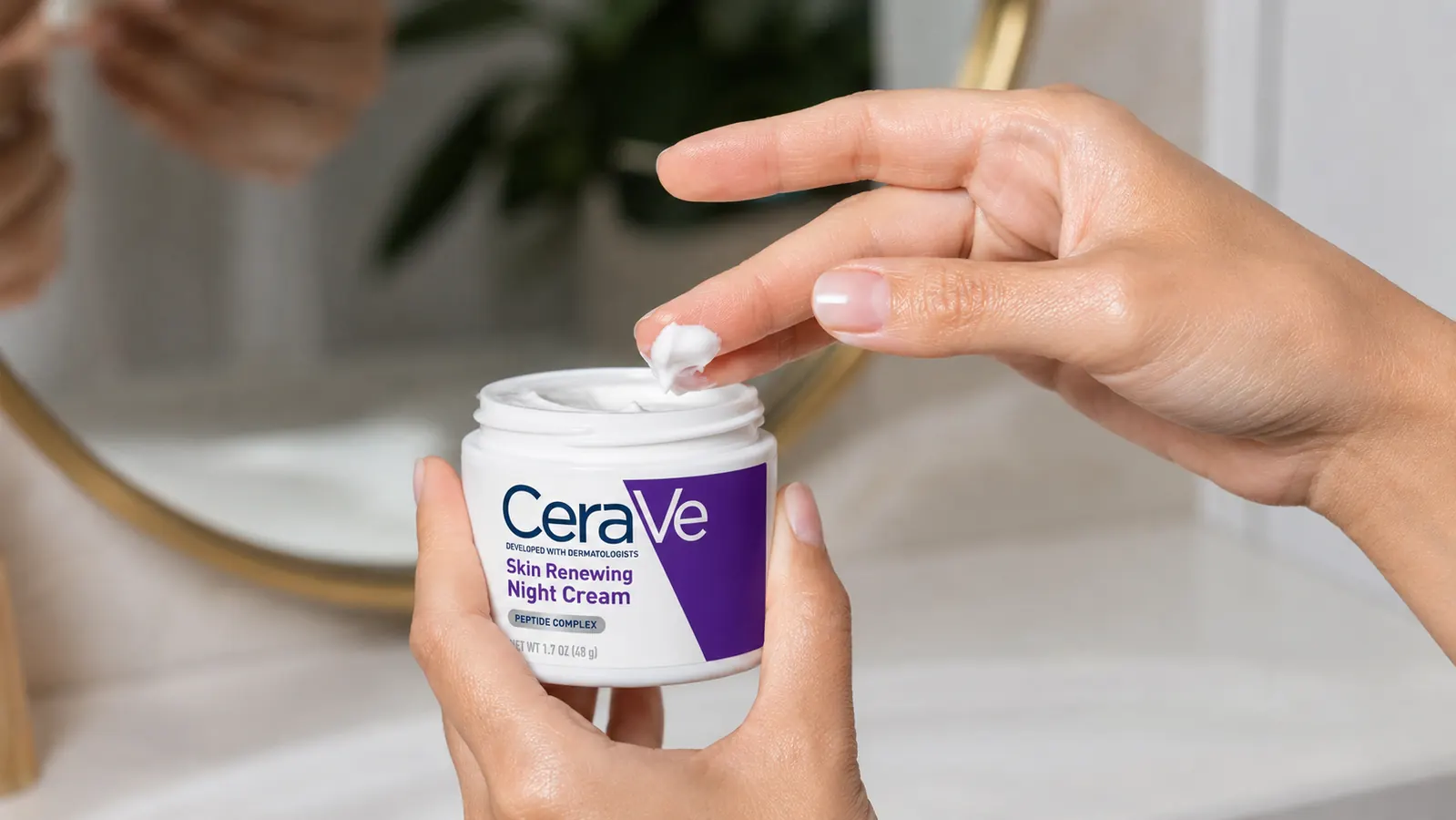
The CeraVe Skin Renewing Night Cream is built on three core ingredient categories: a peptide complex, ceramides, and hyaluronic acid. The peptides here are palmitoyl tripeptide-1 and palmitoyl tripeptide-38, a pairing that supports the skin's structural proteins over time. Peptides do not resurface the skin the way an exfoliant does. They are more like a slow, quiet maintenance signal than an active treatment.
The ceramide blend includes ceramide NP, AP, and EOP, which are three of the ceramides that naturally occur in the skin's outer layer. The premise is that replenishing ceramides from the outside helps maintain the barrier function that keeps moisture in and irritants out. This is not a theoretical claim unique to CeraVe, it is a reasonably well-documented mechanism, and it is one of the reasons dermatologists routinely recommend the brand.
Hyaluronic acid draws moisture to the skin's surface. In a night cream the effect is different from a standalone serum because the thicker base holds the HA in contact with the skin longer. The formula also includes niacinamide, which may help with texture and tone over time, and cholesterol, which works alongside ceramides to stabilize the barrier.
What is not in here: fragrance, retinoids, exfoliating acids, and essential oils. That makes it easier to stack with actives without worrying about interactions. The ingredient list is longer than a clean-beauty brand would have, but there is nothing in it I consider a concern for typical use.
What Changed Over Six Months
Weeks one and two felt like nothing, which is normal for a barrier-focused product. The most immediate thing I noticed was that my skin stopped feeling stretched by 7 AM. That morning-tightness is usually a sign that whatever I put on the night before evaporated or was not occlusive enough. The CeraVe held more moisture through the night than the lighter gel moisturizer I had been using.
By month two, the texture of my skin on waking was noticeably smoother. Not dramatically smoother, but the kind of improvement you notice when you forget to use something for three nights and realize how much better it had been. My T-zone, which tends to be the last place anything sinks in comfortably, stopped feeling greasy in the morning. The cream is rich but not heavy enough to cause excess oil for my skin type.
The peptide-related changes showed up later. Around month three and four, I noticed that the fine dry lines on my forehead, the kind that appear when my skin is dehydrated and flatten out when it is not, were present less consistently. I am not attributing this solely to the peptides. I was also drinking more water and sleeping better that stretch. But I did not see those lines reappear when I temporarily ran out of the CeraVe and swapped to a different moisturizer for ten days, which suggested the CeraVe was a contributing factor.
The morning-tightness I had accepted as a baseline was not inevitable. It was the product I had been using.
Texture, Scent, and Packaging
The cream is thick without being waxy. It spreads easily with two fingers and absorbs within about four to five minutes on my skin. There is a brief period where my face looks slightly dewy, but I go to bed shortly after applying so that has never been an issue. If you apply and then stay up for two hours, you will likely want to give it time before anything presses against your face.
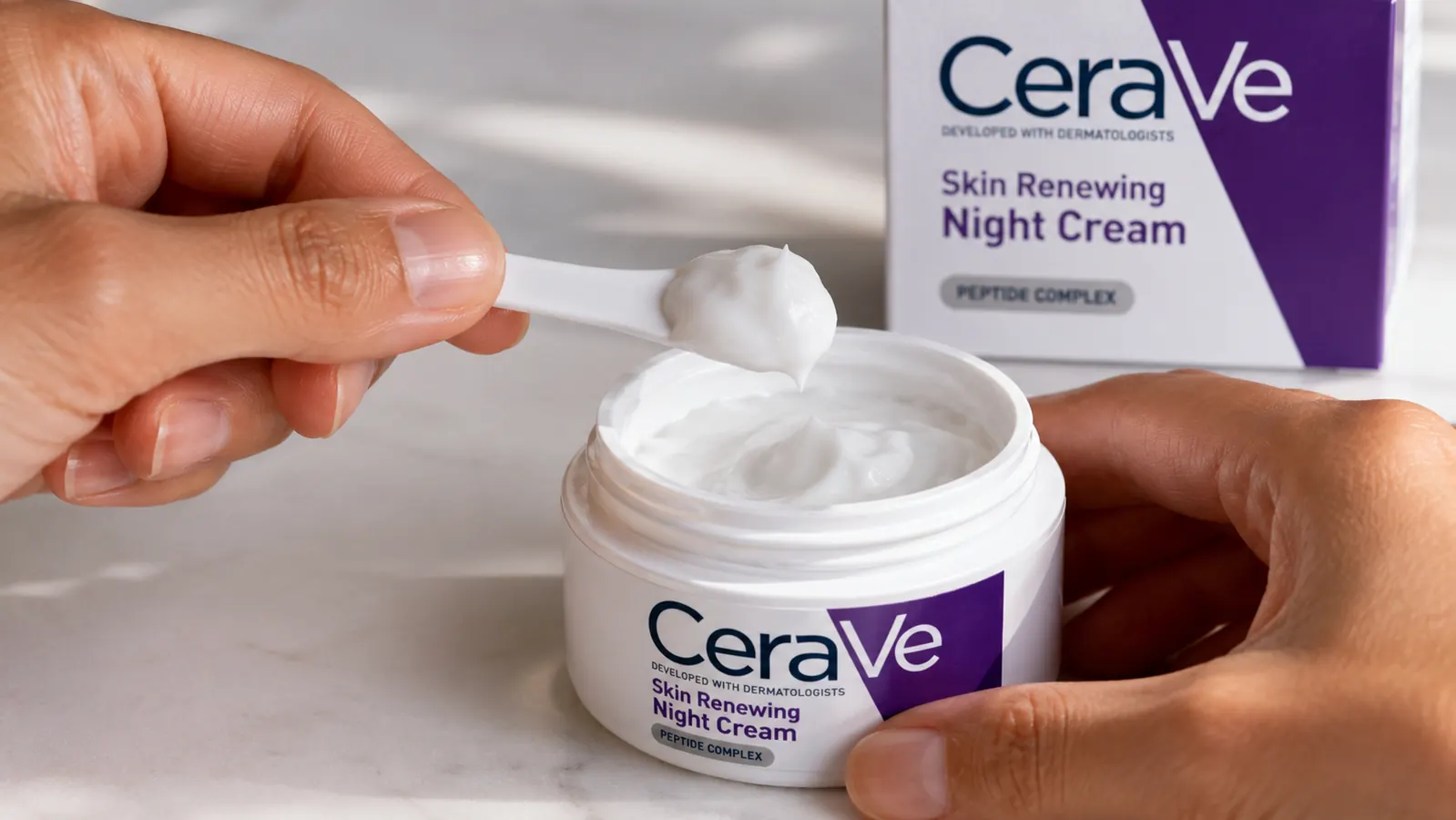
The scent is very faint and neutral, nothing identifiable as floral or chemical. For someone sensitive to fragrance, this is the right direction. The jar format is the one thing I would change. Jar packaging exposes the product to air and bacteria every time you open it. I use a small spatula rather than my fingers to keep things clean. If CeraVe moved this to a pump, it would be strictly better.
The jar lasts a long time. I use approximately half a pump nightly and one jar (1.7 oz) lasted me nearly three months. At the current price, the cost per use is low enough that this is not a category where I spend time calculating value. It is just good.

How It Performed as a Buffer Under Retinoid
This section is for anyone who has wanted to add a retinoid but keeps pushing it back because of irritation history. The CeraVe Skin Renewing Night Cream works well as the final step after a low-concentration retinoid, sometimes called sandwiching, where you apply moisturizer before and after the retinoid to slow absorption and reduce surface irritation.
On the two nights per week when I used a 0.025% retinol, I applied a thin layer of the CeraVe before the retinol, waited fifteen minutes, applied the retinol, waited another ten minutes, and then finished with the CeraVe again. I had zero flaking and minimal redness after four weeks at this cadence. On previous retinol attempts without this approach, I was peeling by week two. I cannot isolate whether this outcome was specific to the CeraVe versus any other barrier-supporting cream, but it worked.
Alternatives I Considered
Before settling on the CeraVe Skin Renewing Night Cream, I tried three other night moisturizers: an Olay Regenerist night cream, a Neutrogena Hydro Boost water gel, and a Cetaphil Rich Nighttime Cream. The Olay had a heavier texture and a distinct fragrance that I found tiring after a few weeks. The Neutrogena gel was too light for my skin in colder months, better suited for oilier skin types. The Cetaphil was a close competitor, but it lacks the peptide complex and the niacinamide content of the CeraVe, which shifted my preference.
I have also written a direct comparison if you are specifically deciding between the CeraVe and the Olay Regenerist. The short version is that for dry and combination skin, the CeraVe's ingredient profile is more complete at a similar price. For normal or oilier skin, the Olay's texture might suit you better.
What I Liked
- Peptide complex (palmitoyl tripeptide-1 and -38) supports skin texture over consistent use
- Three ceramides plus hyaluronic acid address both barrier repair and surface hydration in one step
- Fragrance-free and free of essential oils, easy to stack with actives
- Works well as a buffer layer under or over low-concentration retinoids
- Jar lasts approximately three months with nightly use
- Dermatologist-recommended formula at a drugstore price
Where It Falls Short
- Jar packaging is not ideal for hygiene or ingredient stability compared to a pump dispenser
- Rich texture may feel heavy for oily skin types, especially in humid summer months
- Takes four to six weeks of consistent use before results are noticeable
- Not an exfoliant, will not address rough texture or uneven tone on its own
- Can contribute to milia if applied too close to the eye area
Who This Is For
The CeraVe Skin Renewing Night Cream is best suited to people with normal, dry, or combination skin who experience morning tightness, mild dryness, or barrier sensitivity. It also fits well into routines that include active ingredients like retinoids or exfoliating acids, because it provides enough occlusion to buffer without clogging pores for most skin types. If you are building a nighttime routine and want a reliable final step that does not conflict with anything else, this is a low-risk, high-utility choice.
It is also a practical option for people new to skincare who want one product that handles hydration and barrier support in one jar without requiring a complex routine around it. If you want a full framework for building a nighttime routine with this cream as the anchor, I have written a step-by-step guide to exactly that.
Who Should Skip It
If your main concern is visible texture or tone, you need an active ingredient alongside a moisturizer, not instead of one. This cream will not exfoliate dead skin cells or visibly fade post-blemish marks on its own. It also is not the right call for oily or acne-prone skin in warmer months, where a gel moisturizer or a non-comedogenic lighter lotion would sit more comfortably overnight. Anyone who prefers minimalist ingredients or short INCI lists may find the formula more complex than they want, even though none of the ingredients are problematic.
Six months in, this is still the last step in my nighttime routine.
The CeraVe Skin Renewing Night Cream with peptide complex, ceramides, and hyaluronic acid. Fragrance-free, dermatologist-recommended, and available at a drugstore price. Over 56,000 reviews on Amazon. See today's price using the link below.
Amazon Check Today's Price on Amazon →