
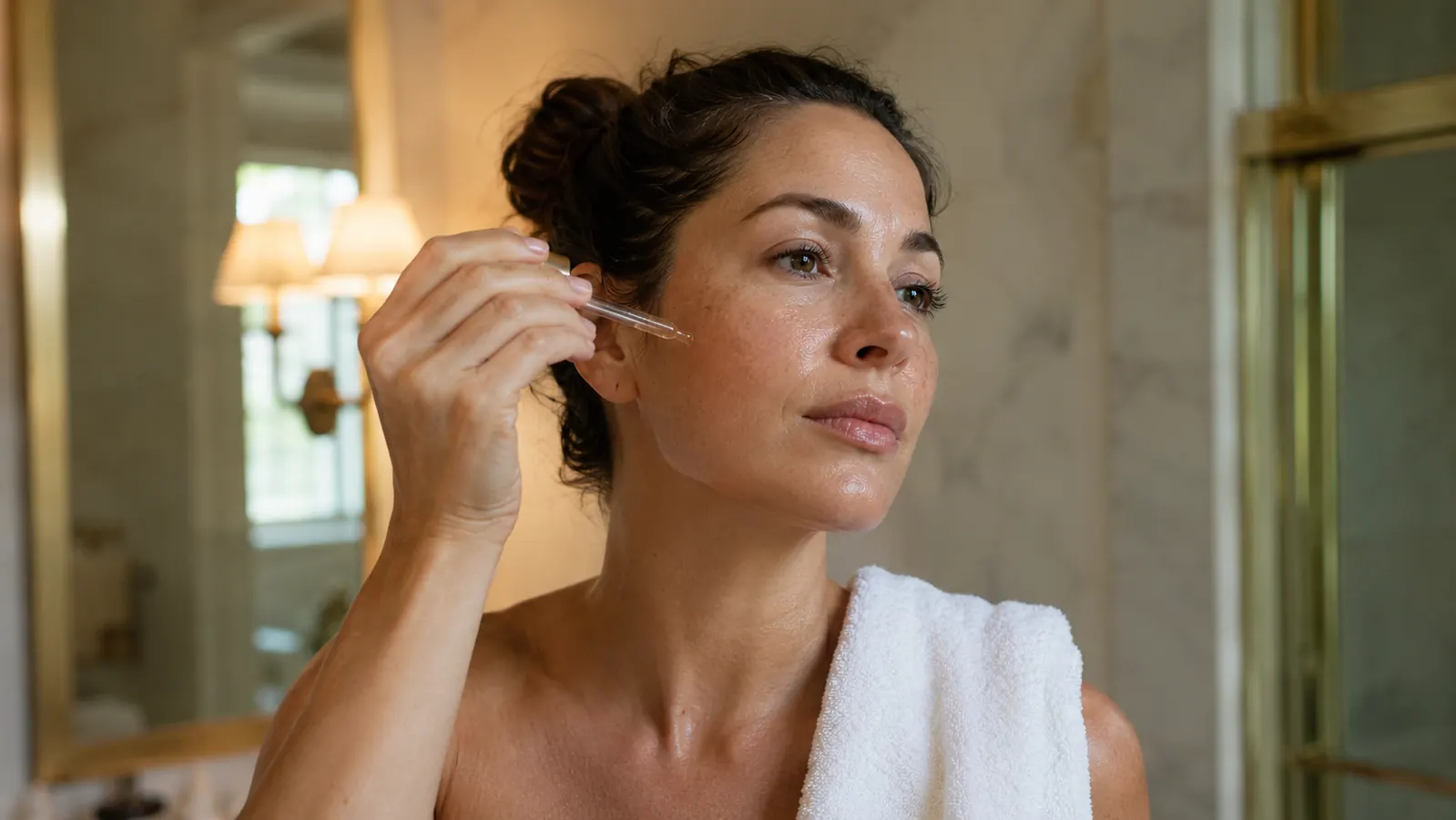
I have watched a lot of people get frustrated with hyaluronic acid serums. They buy one with great reviews, use it for two weeks, and then report that their skin still feels tight or, worse, that it feels drier than before they started. I understand the confusion because I spent a year in the same loop before a cosmetic chemist friend pointed out what I was doing wrong. The problem is almost never the serum. It is almost always the application method.
Hyaluronic acid is a humectant. That means it pulls moisture toward itself from wherever moisture is available. If you apply it to completely dry skin in a dry environment, it draws from the deeper layers of your skin instead of from the air. You end up with the opposite of what you paid for. The fix is simple once you know it, and it works with any HA serum you currently own. I am going to walk through exactly how to do it using the CeraVe Hyaluronic Acid Serum with Vitamin B5 as a reference point, because I have been using it consistently for four months and the results have been noticeably different from my pre-fix routine. The serum comes in at 4.6 stars from over 30,000 buyers on Amazon, and most of the complaints in the one-star section trace back to this same application mistake rather than anything wrong with the formula itself.
Skin still tight even after moisturizer? The layering order is likely the issue.
The CeraVe Hyaluronic Acid Serum with Vitamin B5 and Ceramides has a 4.6-star rating from over 30,000 buyers. It works best when you follow the damp-skin rule explained in the steps below. Check the current price before you buy.
Amazon Check Today's Price on Amazon →Step 1: Cleanse and Leave Skin Slightly Damp
Start with your regular cleanser. When you rinse it off, do not pat your face fully dry. Use your towel to blot only the water that would drip down your neck. You want the skin to still feel cool and slightly damp to the touch. Not soaking wet, not bone dry. That surface moisture is what your hyaluronic acid serum needs to function as a humectant rather than a sink that draws from the inside out.
If you use a toner, apply it right after cleansing and then proceed while the toner is still sitting on the surface of your skin. Hydrating toners with glycerin or aloe give the HA even more moisture to work with. Exfoliating toners with AHAs or BHAs should fully absorb first, usually two to three minutes, before you apply a serum on top. The goal in either case is to never let your face reach the point where it feels tight or pulls when you raise your brows.
If you live somewhere with very low indoor humidity, particularly in winter, the air will not contribute enough ambient moisture on its own. In that case, use a small spray bottle of plain water or a hydrating facial mist immediately after cleansing, then apply the serum while the mist is still on the skin. I keep a facial mister on my bathroom shelf for exactly this purpose from October through March. Without it, the HA step in dry winter air would pull moisture out of my skin instead of into it.
Step 2: Dispense the Right Amount
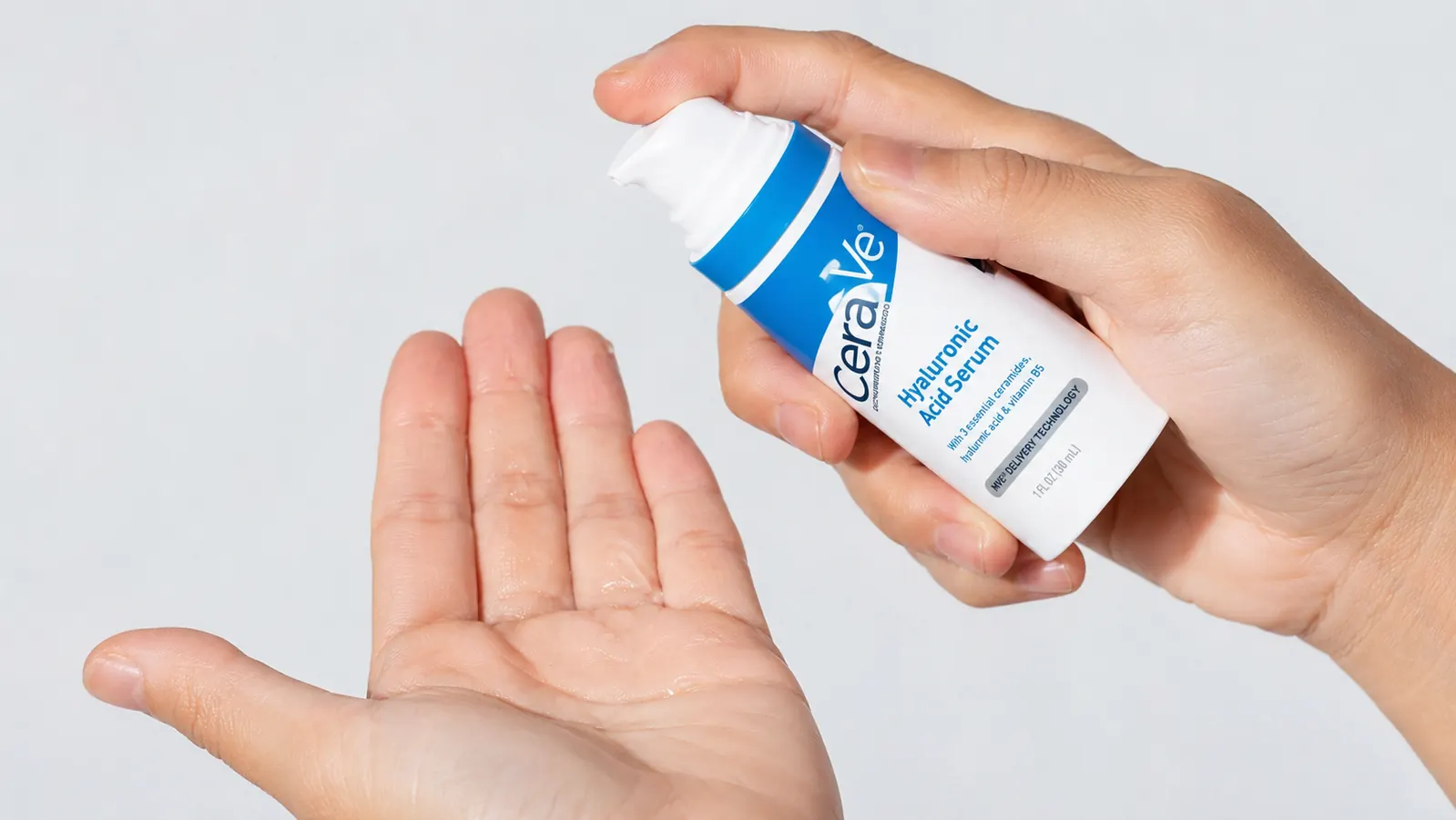
Most people overapply serums. With the CeraVe HA Serum, I use four to five drops from the dropper for my full face and neck. That is roughly the size of a small pea if you pool it in your palm first. Using more does not improve results. The HA molecules can only bind to a finite amount of moisture, and excess product just sits on the surface and tends to feel tacky or pill under moisturizer when you layer it.
Dispense into your palm rather than directly onto your face. This warms the formula slightly, which helps it spread more evenly. The CeraVe HA Serum has a gel-like consistency that distributes well across the skin without dragging or tugging. That matters when your skin is in a fragile post-cleanse state. If you are using a thicker HA serum from another brand, warming it in your palm matters even more because a cold, viscous gel applied directly to the face rarely spreads evenly and often gets concentrated in one spot.
Step 3: Press In, Do Not Rub
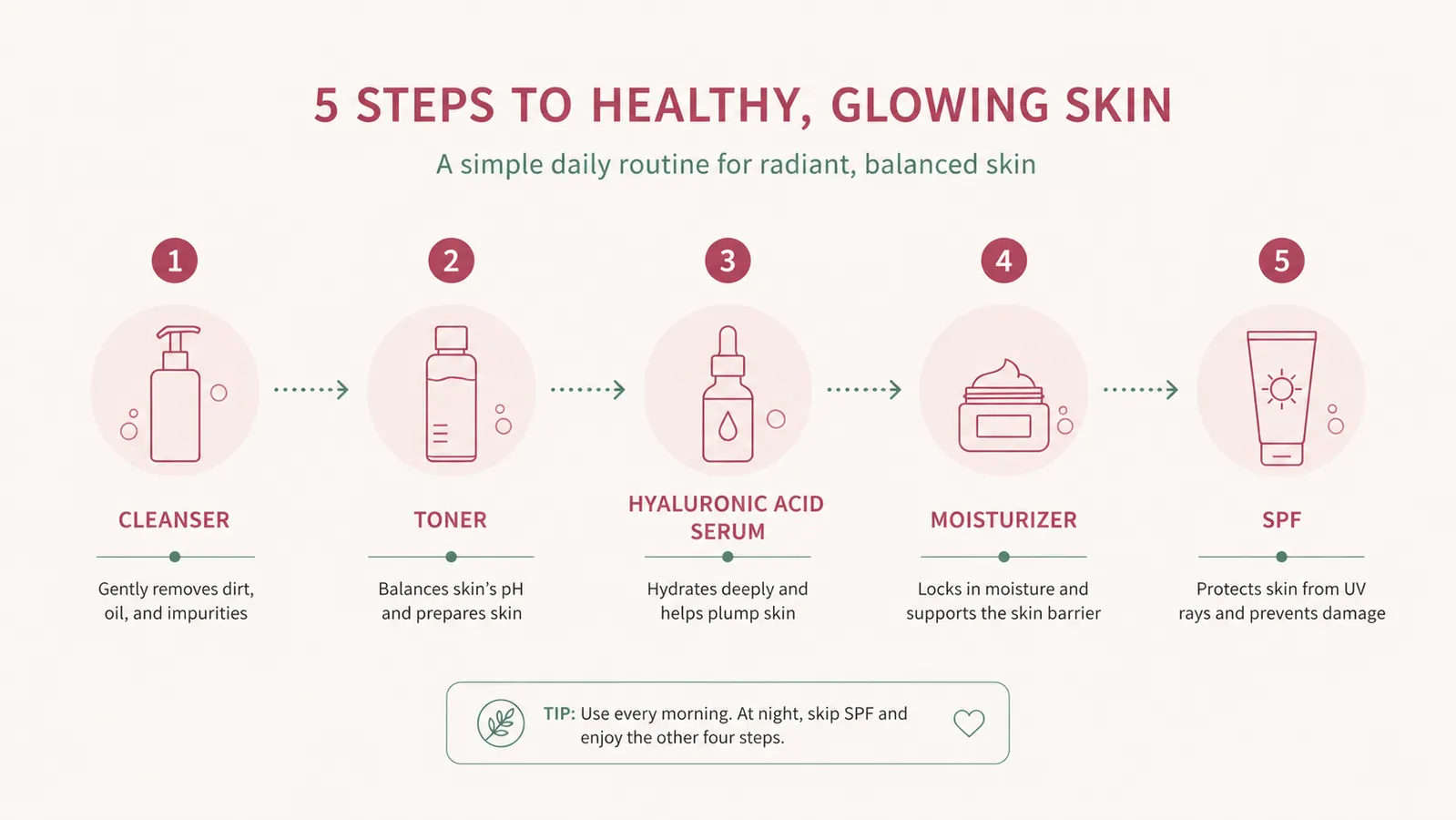
Apply the serum by pressing your palms against your face and patting gently rather than rubbing or spreading in circles. Pressing delivers the product directly into the outer skin layer without moving the surface moisture you just created. Rubbing in a circular motion can displace moisture unevenly and can push the serum into expression lines, which then dry and emphasize them rather than fill them.
Start at the center of your face and press outward toward your temples and jaw. Give extra attention to drier zones: the sides of your nose, the area just below your eyes, and the skin under your lower lip. These spots tend to feel the tightest because they have fewer oil glands and lose moisture faster. A focused pat there with whatever serum remains on your fingers is usually enough to cover them thoroughly.
Allow the serum to rest on your skin for thirty to sixty seconds before moving to the next step. You should feel the surface shift from slightly tacky to barely-there as the HA draws in the surrounding moisture and starts bonding with the skin. This is the absorption window. Do not rush through it by immediately reaching for your moisturizer. If you layer on top before this window closes, you can trap the serum before it finishes absorbing and the results are inconsistent.
Step 4: Seal with a Moisturizer Within Sixty Seconds
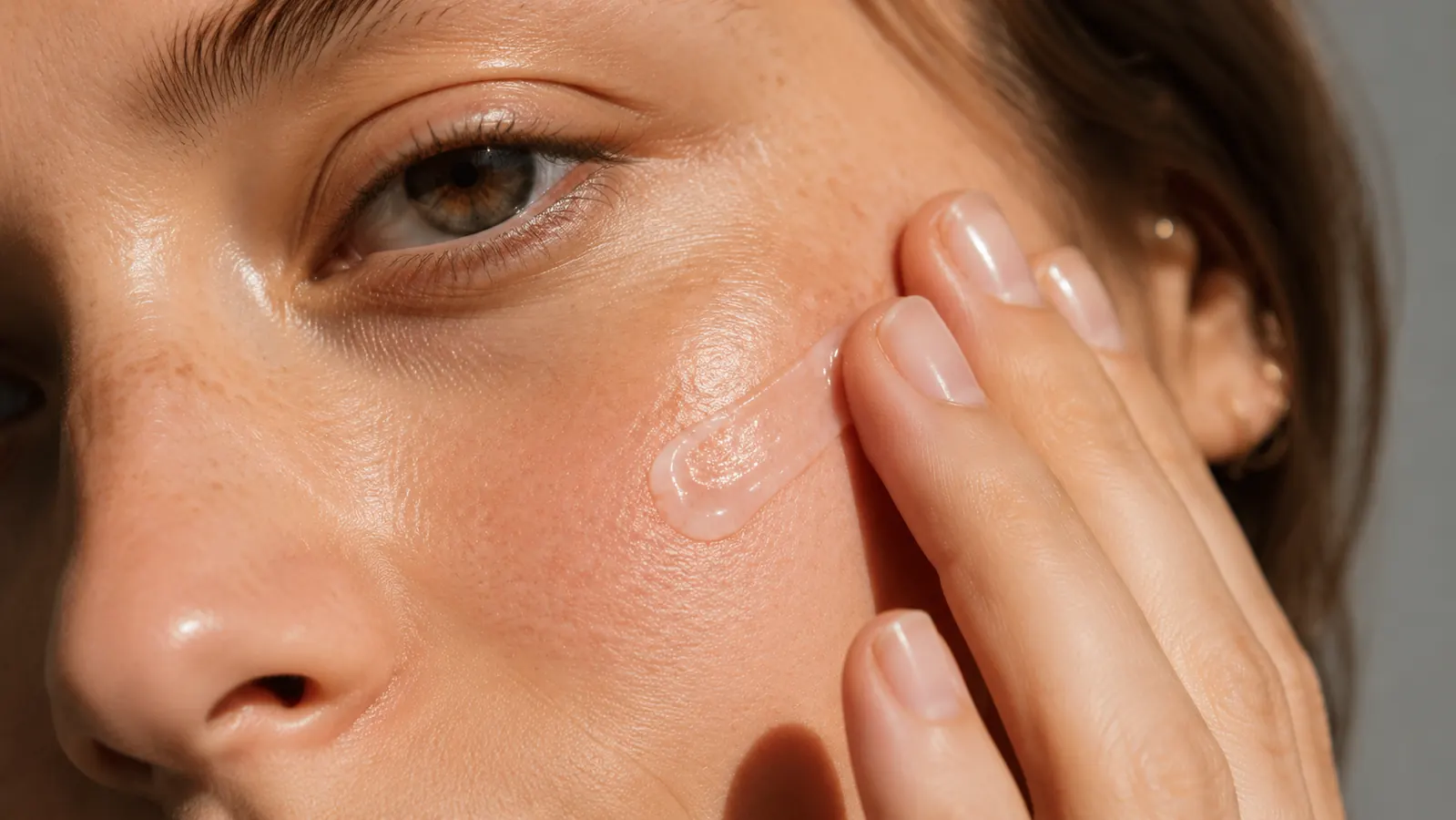
This is the most important step in the entire sequence. A hyaluronic acid serum is not a moisturizer on its own. It draws water in, but without an occlusive or emollient layer on top, that water evaporates back out through the surface. Think of the serum as the reservoir and the moisturizer as the lid. Without the lid, you lose the hydration the serum just gathered.
Apply your regular face moisturizer within sixty seconds of pressing in the serum. You want the moisturizer to arrive while the HA is still hydrated and active. Any standard moisturizer will work here. If you want to stay within the CeraVe lineup for clean layering, the CeraVe Daily Moisturizing Lotion and the Moisturizing Cream both sit well on top of the HA serum without pilling. I use the lotion in summer when humidity does some of the sealing work naturally, and the cream in winter when my barrier needs more support. Either way, apply with the same pressing motion you used for the serum to avoid disrupting the layer underneath.
One note on timing: if you apply your moisturizer and your face still feels slightly damp underneath, that is fine. It means the HA layer is actively working. What you want to avoid is the reverse: waiting so long that your skin dries completely before you add the moisturizer. At that point, the HA has already lost most of the surface moisture it was holding onto and the benefit is much reduced.
Step 5: Finish with SPF in the Morning, or a Face Oil at Night
In the morning, the final step is sunscreen. A broad-spectrum SPF goes on last, after moisturizer, because it needs to sit at the outermost layer to intercept UV radiation. If you reverse the order and apply SPF under moisturizer, you dilute the filter and reduce actual protection. Use two finger-lengths of sunscreen and spread it across your entire face, the bridge of your nose, your eyelids if they are not sensitive, and the top of your neck. Hyaluronic acid on its own does not increase sun sensitivity, but a well-hydrated skin barrier absorbs and responds to UV damage differently than a dehydrated one, so maintaining that hydration while protecting with SPF is the full picture.
At night, you can finish with a face oil after your moisturizer as an optional extra occlusive step. Oils are lipophilic, meaning they sit on top of the water-based layers underneath rather than mixing with them. They act as an additional barrier that slows overnight water loss. A few drops of squalane or rosehip oil pressed over your moisturizer is enough. Do not substitute an oil for the moisturizer entirely. The oil locks in what is already there but does not add hydration on its own.
If you use a retinol or retinoid at night, apply it between the serum step and the moisturizer step, not before the HA layer. The HA helps buffer the drying effect of retinol by keeping the barrier more hydrated during the hours when the retinoid is most active. I switched to this order about eight months ago and my retinol peeling dropped noticeably within the first week. The barrier needs to be hydrated first, retinol second, then sealed with moisturizer on top.
What Else Helps
Consistency matters more than any single product swap. If you follow these five steps once and then revert to your old routine the next day, you will not notice a meaningful difference in your skin. Hyaluronic acid's benefits build over time and fluctuate with daily environmental conditions. In months when the air in your home is drier, you will likely need to add the facial mist step even if you did not need it in summer. A simple test: pay attention to how your skin feels the day after you skip the damp-skin step versus the day you follow it carefully. That contrast tends to make the habit stick faster than any explanation. For a closer look at the CeraVe serum's specific formula and what four months of daily use actually produced, the full breakdown is in the CeraVe Hyaluronic Acid Serum review. And if you want a plain-language account of what HA does at the cellular level, the piece on 10 reasons hyaluronic acid serum keeps skin plump covers the mechanisms without the jargon.
Without a moisturizer on top within sixty seconds, the water your serum just pulled in evaporates straight back out. The serum is the reservoir. The moisturizer is the lid.
Ready to try the layering method with a serum that suits every skin type?
The CeraVe Hyaluronic Acid Serum with Vitamin B5 is formulated with three molecular weights of HA plus ceramides to work at multiple skin depths. Fragrance-free, suitable for sensitive skin. Check the current price on Amazon.
Amazon Check Today's Price on Amazon →