
I get this question from readers more than almost any other: is the CeraVe Tinted Mineral Sunscreen worth choosing over EltaMD UV Clear, or does the price difference mean you are actually getting something better? The short answer is that it depends on what your skin needs, not on which brand sounds more credible. The CeraVe Hydrating Mineral Sunscreen SPF 30 with Sheer Tint is a genuinely solid daily-wear option at a drugstore price point. EltaMD UV Clear is a well-formulated SPF 46 that earns its dermatologist recommendations. But they are not interchangeable, and for most people buying one for everyday use, one of them fits the job better than the other.
I spent several weeks wearing both back to back on combination-to-dry skin, noting how each one sat under moisturizer, how each looked in photos, whether either caused breakouts, and whether the finish held up through a full workday. I also talked with a handful of readers who had used both over longer stretches and asked them what they would buy again. Here is what the full picture looks like.
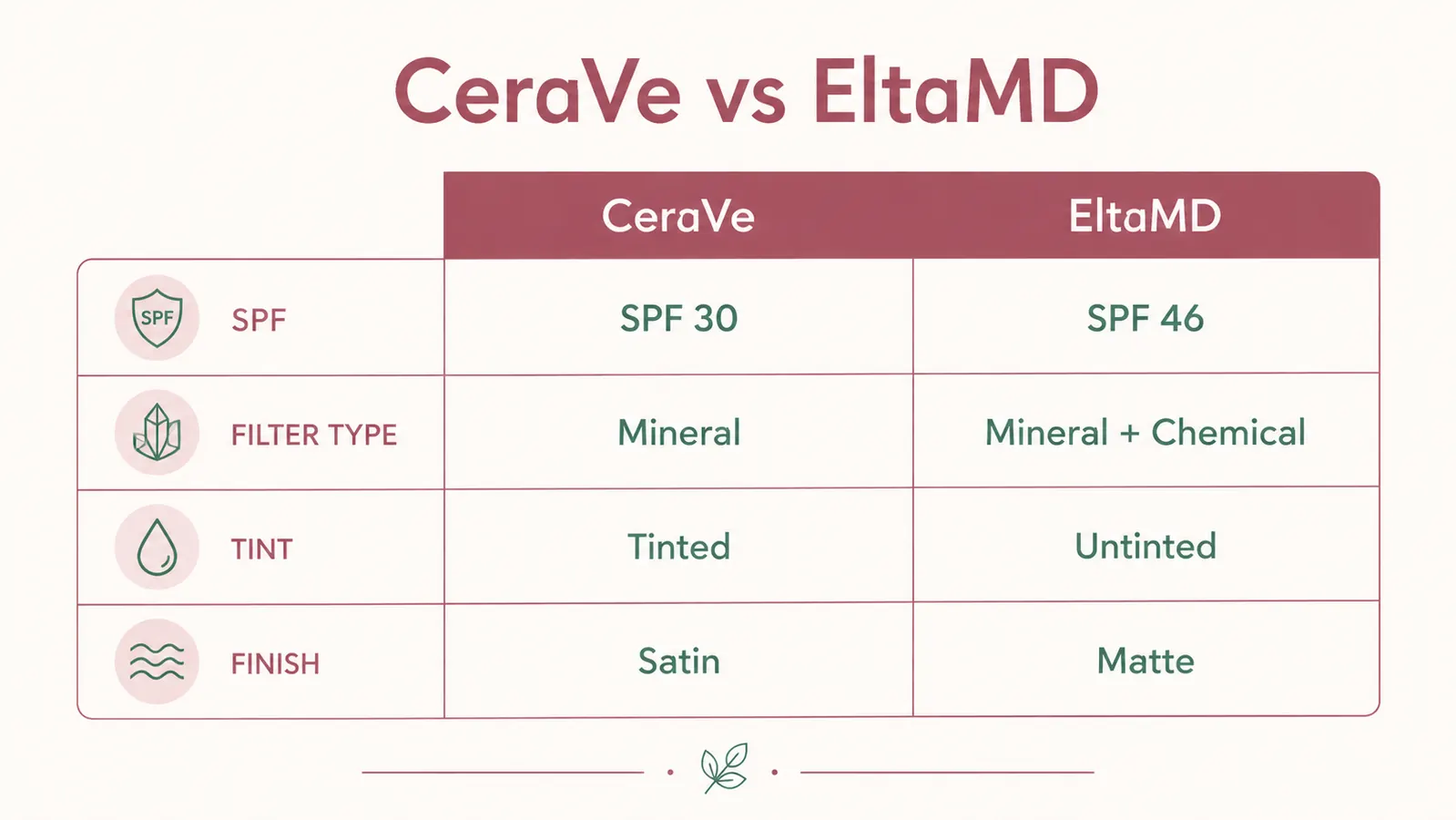
| CeraVe Tinted Sunscreen | EltaMD UV Clear | |
|---|---|---|
| SPF Rating | SPF 30 | SPF 46 |
| Active Filter Type | Mineral only (zinc oxide) | Mineral + chemical (zinc oxide + octinoxate) |
| Tint | Yes, sheer warm tint | No tint (clear version); tinted sold separately |
| Finish | Satin, slight luminosity | Matte, very flat |
| Key Bonus Ingredients | Ceramides (1, 3, 6-II), hyaluronic acid, niacinamide | Niacinamide (5%), lactic acid |
| Skin Type Best Suited | Dry, normal, sensitive | Oily, acne-prone, sensitive |
| White Cast Risk | Low (tint offsets zinc cast) | Very low (minimal cast at low zinc concentration) |
| Price Tier | Drugstore, very affordable | Dermatologist/specialty, premium pricing |
| Wear Under Makeup | Good; tint adds a skip-foundation option | Excellent; matte base ideal for full-coverage foundation |
Where the CeraVe Tinted Mineral Sunscreen Wins
Price is the obvious advantage, but it is not the whole story. At a budget price point, the CeraVe gives you a tube you can apply without rationing, which matters because using enough sunscreen is the single biggest factor in whether it actually works. Studies on SPF efficacy assume a quarter-teaspoon on the face and neck. People who own a premium-priced SPF tend to apply half that amount because they are watching the supply disappear. With the CeraVe, you squeeze out what you need without calculating the remaining uses, and that behavioral difference translates directly into better real-world sun protection.
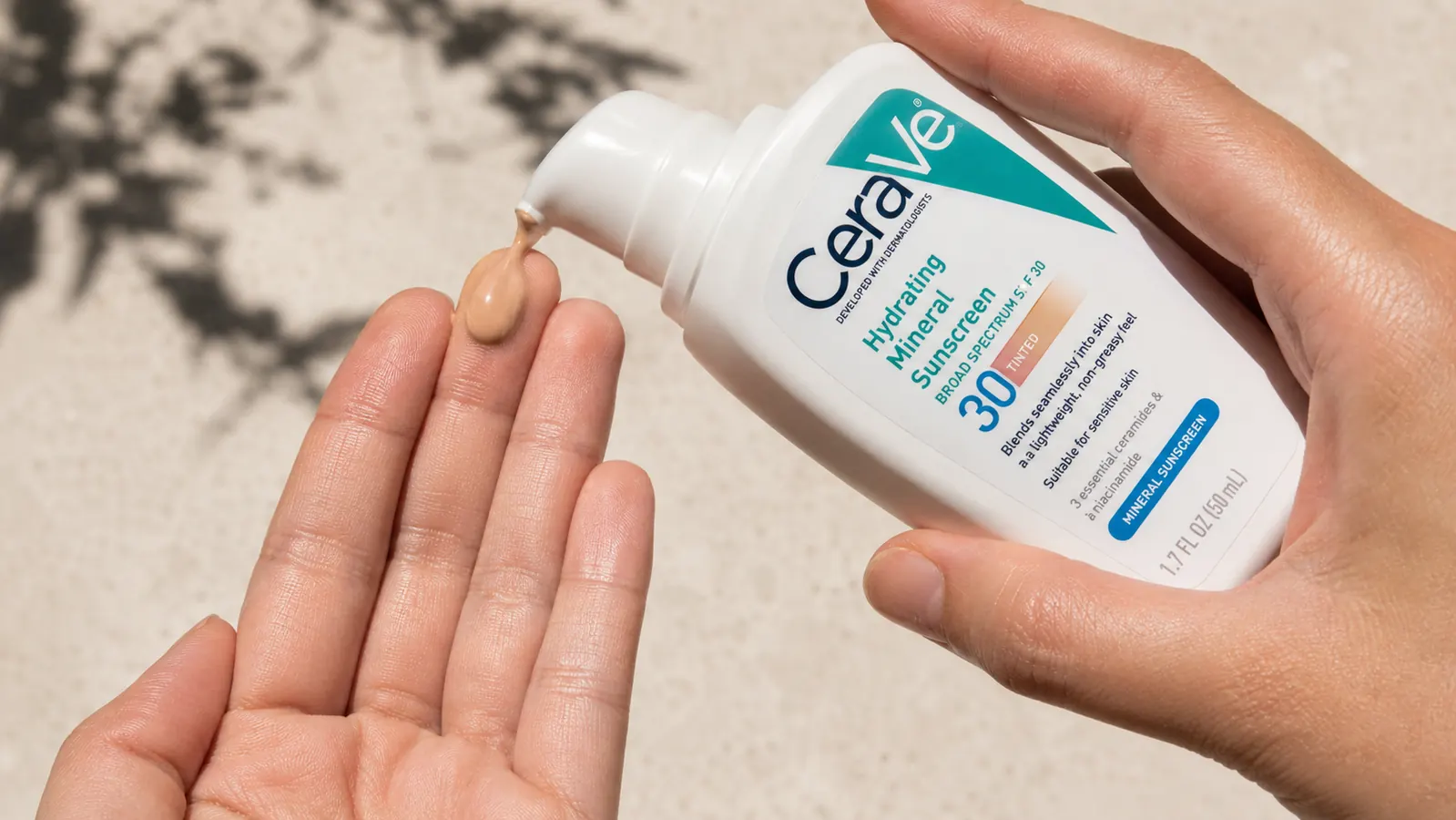
The tint is a real functional benefit, not a marketing add-on. It is a sheer, warm-neutral coverage that knocks out patchiness and blurs the look of redness on its own. On my skin, I could skip foundation on most weekdays and just set the CeraVe with a dusting of translucent powder. That practical convenience adds up over months. The ceramide and hyaluronic acid base also means the formula is doing quiet moisturizing work while it protects, so on lower-humidity days I sometimes skip my separate moisturizer entirely. EltaMD does not offer that.
For skin that trends dry or combination-dry, the CeraVe satin finish reads as healthy rather than greasy. It does not emphasize texture the way some luminous sunscreens can. It is also more forgiving if you apply it unevenly, because the tint blends out naturally during application rather than sitting on top in a way that highlights patches.
Lastly, CeraVe's zinc oxide is the only active, which makes it a cleaner option for people committed to fully mineral filtration. Some readers avoid chemical UV filters for personal preference or because they are pregnant and following conservative guidelines. For them, CeraVe Tinted SPF 30 covers the need that EltaMD UV Clear cannot, because EltaMD includes octinoxate alongside its zinc.
Where EltaMD UV Clear Wins
EltaMD UV Clear earns its reputation specifically for acne-prone and oily skin. The matte finish is genuinely flat in a way the CeraVe is not, which matters if your skin produces visible oil by midday. The 5% niacinamide concentration is higher than what CeraVe includes and is worth noting if sebum control and post-breakout redness are your primary skin concerns. The SPF 46 rating is also meaningfully higher than SPF 30, and if you spend extended time outdoors, live at elevation, or are particularly fair-skinned, that extra protection is not trivial.
EltaMD also has a cleaner, shorter ingredient profile for people managing active cystic acne or rosacea. The formula is fragrance-free, paraben-free, and has been tested on post-procedure skin after chemical peels, laser treatments, and microneedling sessions. If your dermatologist recently did resurfacing work and told you to use only the most minimal SPF for the next several weeks, EltaMD UV Clear is what most of them reach for by name. The CeraVe Tinted SPF, while gentle, has additional actives that you might want to pause during recovery.
EltaMD's watery, near-invisible texture also makes it an easier layering partner for anyone running a multi-step actives routine in the morning. If your serum is already doing heavy lifting on barrier or tone correction, a lightweight, no-feeling sunscreen on top makes the whole stack feel less heavy. That is one area where EltaMD UV Clear is noticeably better positioned than the CeraVe.
If you apply the CeraVe generously every day, you are protecting your skin better than the person who underapplies a premium SPF 46 because they are watching the bottle.
Daily SPF protection without rationing every drop
The CeraVe Tinted Mineral Sunscreen SPF 30 covers, moisturizes, and protects in one step. Over 70,000 verified Amazon reviews back it up, and the price means you will actually use enough of it every morning. Check current availability on Amazon.
Amazon Check Today's Price on Amazon →Finish and Wearability: What They Feel Like in Practice
This is where the two products diverge most noticeably. The CeraVe goes on with a slight slip, typical of a formula carrying hyaluronic acid, and dries to a soft satin finish within about 60 seconds. The tint sheers out naturally with blending and does not look different at the jaw or hairline. On my combination skin, there was mild luminosity through the T-zone by early afternoon, which I managed with a light setting powder. It never looked greasy, just healthy. People who find chemical SPFs irritating or pore-clogging report the CeraVe sits more comfortably, which aligns with its mineral-only filter.
EltaMD UV Clear has a more watery initial texture that absorbs fast and leaves almost no trace. No shininess, no tackiness, no feeling that anything is sitting on your skin by the time you reach for makeup 90 seconds later. If that invisible-base experience is what you want, EltaMD delivers it more cleanly than the CeraVe. The flip side is that EltaMD does not contribute moisture, so if your skin is on the drier side, you will need a moisturizer underneath it and possibly a setting mist later in the day to stay comfortable.
Ingredients Worth Understanding
A note on the "mineral vs mineral plus chemical" distinction: EltaMD UV Clear is sometimes described as purely mineral but it contains octinoxate alongside zinc oxide. That is not necessarily a problem, and octinoxate is well-tolerated by most people. But if you are specifically avoiding chemical filters for sensitivity, pregnancy precaution, or personal preference, the CeraVe Tinted SPF 30 is the purer option. Its only active ingredient is zinc oxide, at a concentration that delivers real broad-spectrum protection without the white cast that older zinc formulas had.
Both formulas contain niacinamide, which is a genuinely useful inclusion in any sunscreen base. It supports the skin barrier, may reduce redness over time, and is associated with reduced sebum output. EltaMD has more of it at 5%, while CeraVe keeps it at a lower supporting percentage. But the CeraVe pairs niacinamide with three ceramide types and hyaluronic acid, which EltaMD does not include. If your priority is barrier repair and hydration alongside protection, the CeraVe formula comes out ahead on ingredient value. If sebum control and skin clarity are the goal, EltaMD's niacinamide concentration gives it a practical edge.
Reapplication: The Practical Reality
Both products assume morning application with reapplication every two hours under direct sun exposure. That guidance matters more for outdoor days than for typical indoor-office situations. For most people, a single morning application of either product is fine for a regular workday with brief outdoor transit. Where the CeraVe pulls ahead on reapplication is the tint factor. Because it doubles as a light coverage product, touching it up at midday feels like refreshing your look, not just doing a skincare step. EltaMD UV Clear, being clear and nearly invisible, is harder to layer over makeup without looking patchy. Most EltaMD users I spoke with used it in the morning and did not reapply midday, which is honest usage.
If you spend most of your sun exposure in commutes and lunch errands rather than beach days, neither product changes the outcome much at the reapplication level. For outdoor work, sports, or travel, a dedicated water-resistant SPF worn over either of these would be the more practical choice anyway.
Who Should Buy the CeraVe Tinted Mineral Sunscreen
Buy the CeraVe if your skin is normal to dry, if you want a one-product morning shortcut that can replace both your moisturizer and light foundation on most days, or if you are not currently getting consistent sun protection because existing options feel expensive or inconvenient. The tint is flattering without reading as makeup, the moisturizing base is a genuine daily bonus, and the price point means you will not ration it. It is also the right starting point for first-time daily SPF users who want something approachable, forgiving, and available at every drugstore.
Who Should Buy EltaMD UV Clear
Buy EltaMD UV Clear if your skin is oily or consistently acne-prone and other sunscreens have made you break out, if you need a completely matte finish that holds through the day, or if a dermatologist specifically recommended it following a treatment. Also choose it if SPF 46 matters to you, if you want a higher niacinamide concentration in your morning base, or if you are managing rosacea and prefer the shortest possible ingredient list on reactive skin. It is a well-made product. It just solves a different problem from what the CeraVe addresses.
For most people buying a daily face SPF for general skin health and consistent sun protection, the CeraVe Tinted Mineral Sunscreen does the job more accessibly, more practically, and at a price that removes all excuses. If the specific features of EltaMD match your skin's situation, that extra cost is justified. But if you are deciding between two solid options for everyday coverage, I would start with the CeraVe and see how your skin responds. You can always move to EltaMD later if you find you need a flatter finish or higher SPF rating.
The sunscreen most people should start with
The CeraVe Tinted Mineral Sunscreen SPF 30 has over 71,000 Amazon reviews, moisturizes while it protects, and costs less than the price of a coffee shop drink per week of daily use. Check current pricing and see whether it fits your routine.
Amazon Check Today's Price on Amazon →